New Testament
Mark 15:39
Read the Bible in clear, modern English—easy to understand, faithful to the meaning, and written for everyday readers.
The Roman centurion standing right across from Jesus saw that he cried out loudly and then gave up the ghost, and said, 'Truly, this man was the Son of God!'
Compare translations
And when the centurion, which stood over against him, saw that he so cried out, and gave up the ghost, he said, Truly this man was the Son of God.
What Mark 15:39 means
Plain-English insight for readers
In Mark 15:39, a Roman centurion, who was responsible for overseeing the crucifixion of Jesus, witnesses the events surrounding Jesus' death. After seeing Jesus cry out loudly and then die, the centurion recognizes something extraordinary about Him. His declaration, 'Truly, this man was the Son of God!' signifies a profound realization of Jesus' true identity. This moment is significant because it highlights that even those who were not part of the Jewish faith, like the centurion, could see the truth of Jesus' divine nature. The centurion's statement serves as a powerful affirmation of Jesus' identity and mission, emphasizing that His death was not just an execution but a pivotal moment in God's plan for salvation. This recognition by a Roman soldier, a representative of the oppressing power, underscores the universal impact of Jesus' sacrifice and the breaking down of barriers between different peoples and faiths.
How to apply Mark 15:39 to your life
This verse encourages us to recognize and affirm Jesus' identity in our own lives. Just as the centurion saw the truth in Jesus, we are called to acknowledge His significance and share that understanding with others, breaking down barriers of belief and culture.
Curated for this public verse page. Mark Summary
Learn the Bible through its people and places
Get to know the people in Scripture through illustrated stories, and explore the places where they lived and traveled.
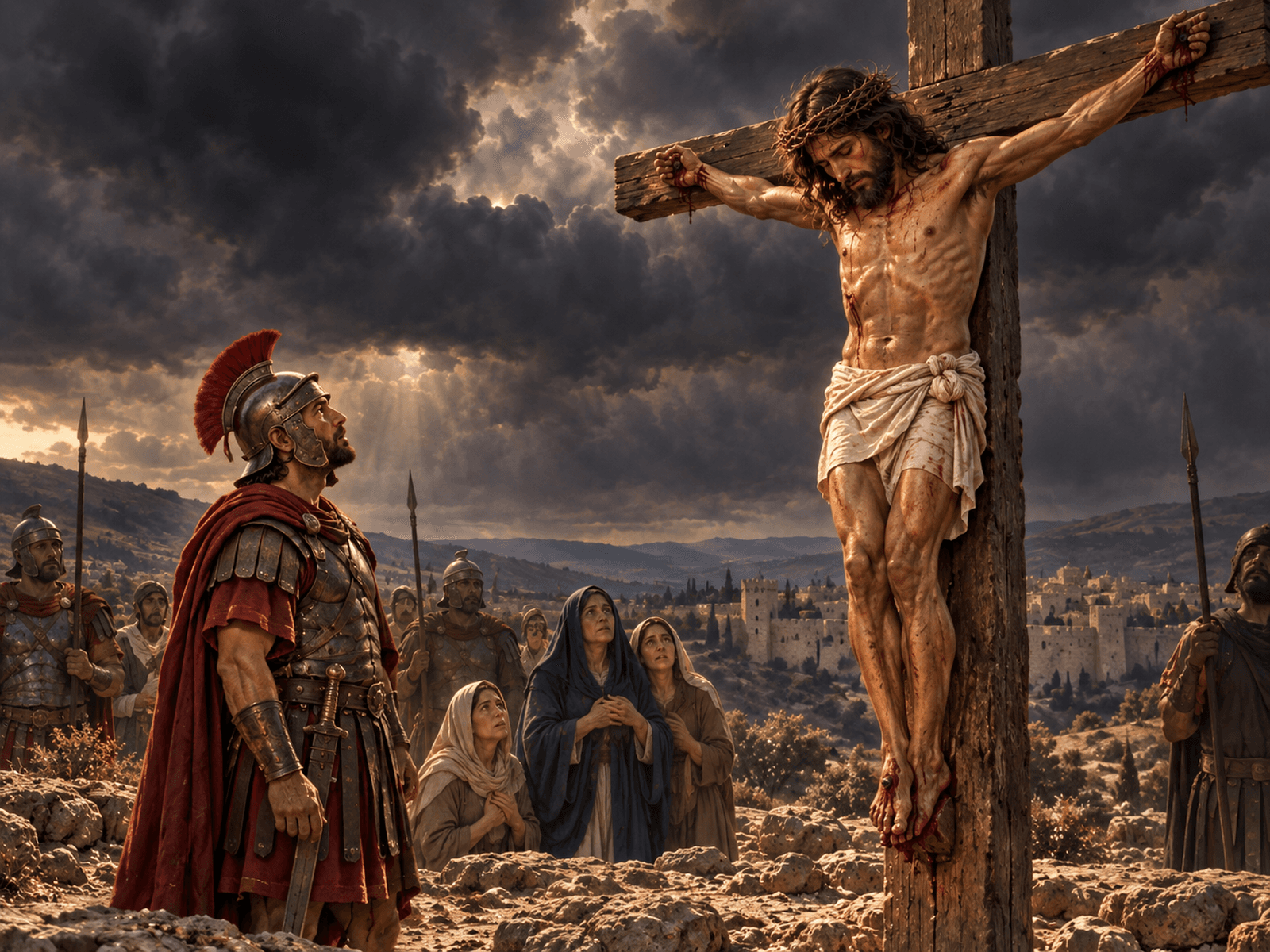
Illustrated scene from Jesus's story: The Death of Jesus (Mark 15:33–41)
Meet the people of the Bible
Follow their lives in order, with illustrated scenes and Bible passages that tell their stories.
 Jesus

Photo: Gary Todd (Gary Lee Todd, Ph.D.), via Wikimedia Commons. License: CC0 1.0 Universal Public Domain Dedication. Source. Location: Southern end of the Temple Mount, Jerusalem Old City. Resized for the web.
Explore the places of the Bible
See where biblical events happened, why each place matters, and what archaeology helps us understand.
Jerusalem
David's capital, the city of the temple, and the place where Jesus died and rose again.
Get full access with one subscription
Explore the people and places of the Bible. Read summaries of every book, with images and clear explanations covering every chapter. Access all these features and our Bible study tools with one subscription.
See PlansAsk AI about Mark 15:39
Ask a question about this verse and get a clear answer, with Bible references you can read for yourself.
Every Bible book, explained chapter by chapter
Explore summaries of every book of the Bible, with images and easy-to-understand explanations covering every chapter.
Keep studying Mark 15:39
Related Bible verses
Key themes
At a Glance — the Book of Mark
- Author
- John Mark
- Written
- Around AD 55-65
- Genre
- Gospel
- Original Audience
- Roman and Gentile Christians
Frequently Asked Questions
Quick, clear answers about this verse
What does Mark 15:39 mean?
Mark 15:39 describes a Roman centurion witnessing Jesus' death and recognizing Him as the Son of God. This moment highlights the centurion's realization of Jesus' divine nature, emphasizing that even those outside the Jewish faith could acknowledge His significance.
What is the significance of the centurion's statement in Mark 15:39?
The centurion's declaration, 'Truly, this man was the Son of God,' signifies a profound recognition of Jesus' identity. It underscores the universal impact of Jesus' sacrifice and shows that His message transcends cultural and religious boundaries.
How does Mark 15:39 relate to the theme of faith of the outsider?
In Mark 15:39, the centurion, a Roman soldier, represents an outsider who recognizes Jesus' divine nature. This illustrates that faith and understanding of Jesus can come from unexpected places, breaking down barriers between different cultures and beliefs.
What does the phrase 'gave up the ghost' mean in Mark 15:39?
The phrase 'gave up the ghost' in Mark 15:39 refers to Jesus' death. It signifies the moment He breathed His last, marking the end of His earthly life and the fulfillment of His mission.
Daily Verse — straight to your inbox
A verse and a 2-sentence plain-English explanation, every morning. Free. Unsubscribe anytime.