New Testament
Mark 9:38
Read the Bible in clear, modern English—easy to understand, faithful to the meaning, and written for everyday readers.
John said to him, "Teacher, we saw someone driving out demons using your name, and we tried to stop him because he isn't one of us."
Compare translations
And John answered him, saying, Master, we saw one casting out devils in thy name, and he followeth not us: and we forbad him, because he followeth not us.
What Mark 9:38 means
Plain-English insight for readers
In this verse, John, one of Jesus' disciples, reports to Jesus that they encountered someone who was casting out demons in Jesus' name, but he was not part of their group. John expresses concern and mentions that they tried to stop this person because he was not one of them. This highlights a common human tendency to protect one's group and to be wary of outsiders, even when they are doing good. Jesus responds to this by emphasizing that anyone who performs miracles in His name is on their side, regardless of their affiliation. This teaches that the work of God can be done by anyone who believes in Him, and it encourages inclusivity and acceptance of those who may not fit into our specific circles. It challenges the disciples' understanding of who can serve God and reminds them that God's power is not limited to a select few.
How to apply Mark 9:38 to your life
This verse encourages us to recognize and support the good works of others, even if they are not part of our immediate community. It reminds us to be open-minded and to celebrate the diverse ways in which God can work through different people, fostering unity rather than division.
Curated for this public verse page. Mark Summary
Learn the Bible through its people and places
Get to know the people in Scripture through illustrated stories, and explore the places where they lived and traveled.
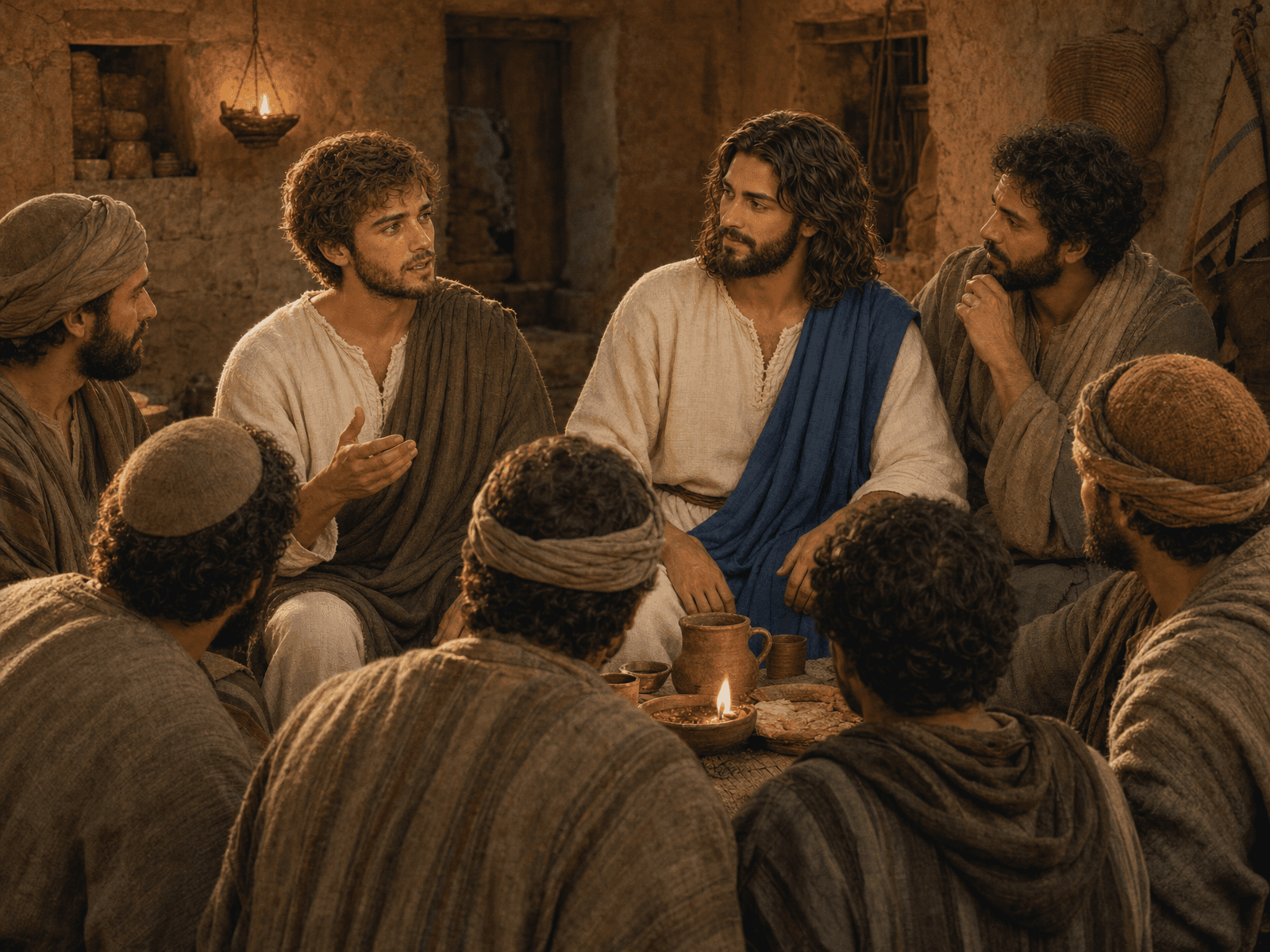
Illustrated scene from John the Apostle's story: “Forbid Him Not” (Mark 9:38–41)
Meet the people of the Bible
Follow their lives in order, with illustrated scenes and Bible passages that tell their stories.
 John the Apostle

Photo: zeevveez, via Wikimedia Commons. License: CC BY 2.0. Source. Location: Capernaum, on the northern shore of the Sea of Galilee. Resized for the web.
Explore the places of the Bible
See where biblical events happened, why each place matters, and what archaeology helps us understand.
Capernaum
Jesus' home base by the Sea of Galilee, and the town where Peter lived.
Get full access with one subscription
Explore the people and places of the Bible. Read summaries of every book, with images and clear explanations covering every chapter. Access all these features and our Bible study tools with one subscription.
See PlansAsk AI about Mark 9:38
Ask a question about this verse and get a clear answer, with Bible references you can read for yourself.
Every Bible book, explained chapter by chapter
Explore summaries of every book of the Bible, with images and easy-to-understand explanations covering every chapter.
Keep studying Mark 9:38
Related Bible verses
Key themes
Related topics
At a Glance — the Book of Mark
- Author
- John Mark
- Written
- Around AD 55-65
- Genre
- Gospel
- Original Audience
- Roman and Gentile Christians
Frequently Asked Questions
Quick, clear answers about this verse
What does Mark 9:38 mean?
Mark 9:38 describes an incident where John tells Jesus about someone casting out demons in His name, even though he is not part of their group. This shows the disciples' concern for exclusivity and highlights Jesus' teaching that anyone doing good in His name is on His side, regardless of their affiliation.
What is the significance of casting out demons in Jesus' name in Mark 9:38?
Casting out demons in Jesus' name signifies the authority and power that comes from faith in Him. It illustrates that God's work can be accomplished by anyone who believes, not just those within a specific group.
What does John mean when he says 'he isn't one of us' in Mark 9:38?
When John says 'he isn't one of us,' he is expressing a common human tendency to protect one's own group and be wary of outsiders. This reflects a concern for belonging and identity within the disciples' circle.
How does Jesus respond to John's concern in Mark 9:38?
Jesus responds by emphasizing that anyone who performs miracles in His name is on their side, regardless of their group affiliation. This teaches the importance of inclusivity and recognizing the work of God beyond established boundaries.
Daily Verse — straight to your inbox
A verse and a 2-sentence plain-English explanation, every morning. Free. Unsubscribe anytime.