New Testament
Revelation 1:4
Read the Bible in clear, modern English—easy to understand, faithful to the meaning, and written for everyday readers.
John, to the 7 churches in Asia: May grace and peace be yours from the one who is, who was, and who is coming — and from the 7 Spirits before his throne —
Compare translations
John to the seven churches which are in Asia: Grace be unto you, and peace, from him which is, and which was, and which is to come; and from the seven Spirits which are before his throne;
What Revelation 1:4 means
Plain-English insight for readers
In this verse, John addresses the seven churches in Asia, wishing them grace and peace. The phrase "the one who is, who was, and who is coming" refers to God, emphasizing His eternal nature and presence throughout time. This highlights God's sovereignty and unchanging character. The mention of the "seven Spirits" symbolizes the fullness of the Holy Spirit, indicating divine guidance and empowerment for the churches. This greeting sets a tone of hope and assurance, reminding believers of God's constant support and the spiritual resources available to them. The use of the number seven often signifies completeness in biblical literature, suggesting that the message is relevant to all churches and believers, not just the seven mentioned. Overall, this verse serves as a reminder of God's grace and peace, which are essential for spiritual strength and perseverance in faith amidst challenges.
How to apply Revelation 1:4 to your life
As believers, we can find comfort in knowing that God's grace and peace are always available to us. In times of trouble or uncertainty, we should seek His presence and rely on the Holy Spirit for guidance and strength in our daily lives.
Curated for this public verse page. Revelation Summary
Learn the Bible through its people and places
Get to know the people in Scripture through illustrated stories, and explore the places where they lived and traveled.

Illustrated scene from John the Apostle's story: On Patmos (Revelation 1:1–11)
Meet the people of the Bible
Follow their lives in order, with illustrated scenes and Bible passages that tell their stories.
 John the Apostle
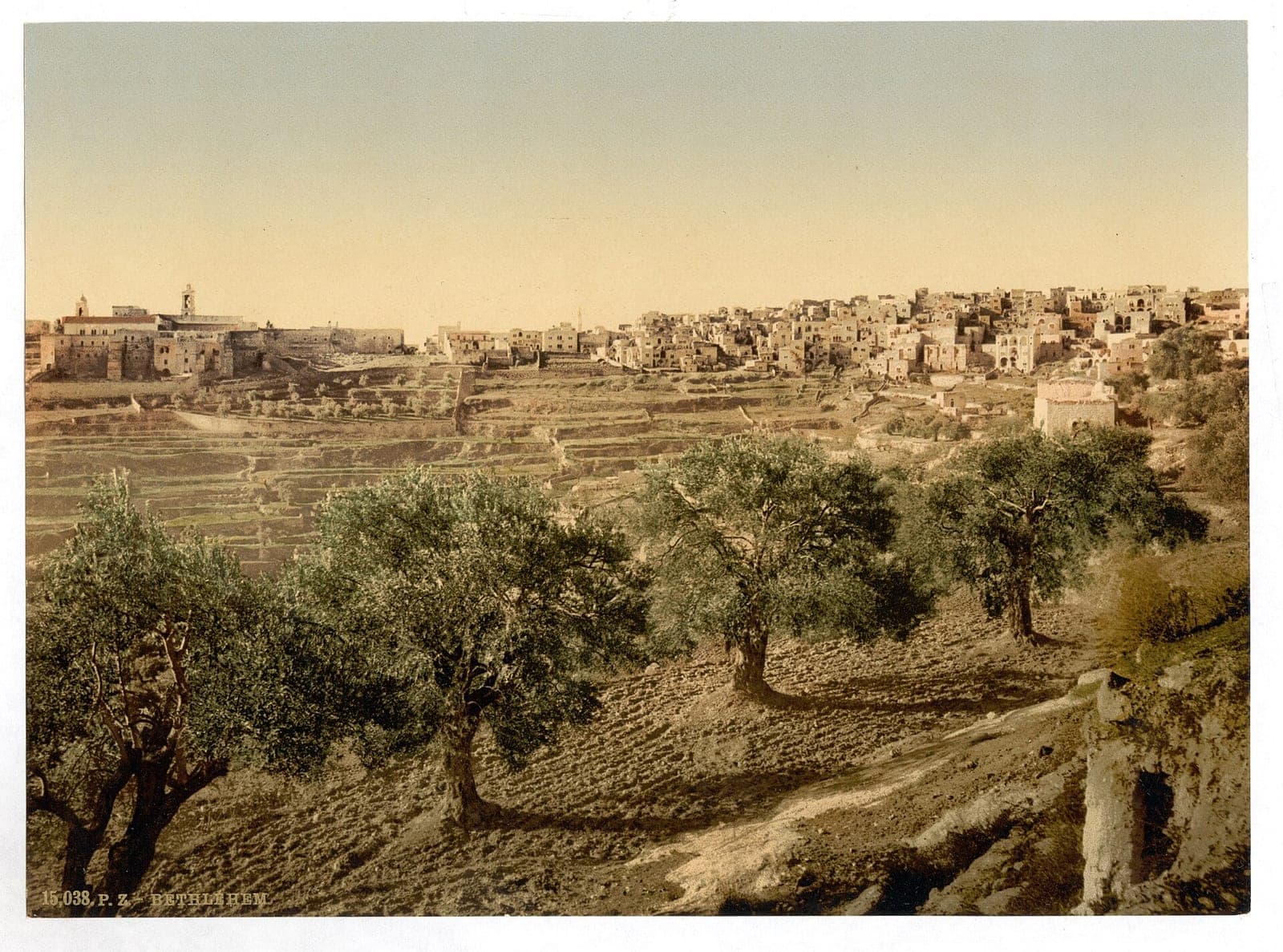
Photo: Photochrom print, Library of Congress Prints and Photographs Division (LCCN 2002724966). License: Public domain in the United States; Library of Congress states no known restrictions on publication. Source. Location: Bethlehem, West Bank; print preserved by the Library of Congress. Resized for the web.
Explore the places of the Bible
See where biblical events happened, why each place matters, and what archaeology helps us understand.
Bethlehem
David's hometown, and the town where Jesus was born.
Get full access with one subscription
Explore the people and places of the Bible. Read summaries of every book, with images and clear explanations covering every chapter. Access all these features and our Bible study tools with one subscription.
See PlansAsk AI about Revelation 1:4
Ask a question about this verse and get a clear answer, with Bible references you can read for yourself.
Every Bible book, explained chapter by chapter
Explore summaries of every book of the Bible, with images and easy-to-understand explanations covering every chapter.
Keep studying Revelation 1:4
Related Bible verses
Related topics
At a Glance — the Book of Revelation
- Author
- John the apostle
- Written
- Around AD 95
- Genre
- Apocalyptic prophecy
- Original Audience
- The seven churches of Asia Minor
Frequently Asked Questions
Quick, clear answers about this verse
What does 'the one who is, who was, and who is coming' mean?
This phrase emphasizes God's eternal nature, indicating that He exists in all times: past, present, and future. It reassures believers of His constant presence and sovereignty over history, reminding them that God is always with them, regardless of their circumstances.
Who are the 'seven Spirits' mentioned in Revelation 1:4?
The 'seven Spirits' symbolize the fullness and completeness of the Holy Spirit. This imagery suggests divine guidance and empowerment for the churches, indicating that the Holy Spirit is fully present and active in the lives of believers, providing them with the strength and wisdom they need.
Why is the number seven significant in this verse?
In biblical literature, the number seven often represents completeness and perfection. By addressing the 'seven churches,' the verse implies that the message of grace and peace is not just for these specific churches but is relevant to all believers, emphasizing the universal nature of God's support and guidance.
How can I apply the message of grace and peace in my life?
You can apply this message by actively seeking God's grace and peace in your daily life, especially during challenging times. This involves prayer, meditation on Scripture, and reliance on the Holy Spirit for guidance. Embracing these gifts can help you navigate difficulties with hope and strength.
Daily Verse — straight to your inbox
A verse and a 2-sentence plain-English explanation, every morning. Free. Unsubscribe anytime.