New Testament
Revelation 20:13
Read the Bible in clear, modern English—easy to understand, faithful to the meaning, and written for everyday readers.
The sea gave up the dead that were in it, and death and hell gave up the dead that were in them. Every man was judged according to their works.
Compare translations
And the sea gave up the dead which were in it; and death and hell delivered up the dead which were in them: and they were judged every man according to their works.
What Revelation 20:13 means
Plain-English insight for readers
In Revelation 20:13, the passage describes a future event known as the final judgment. It states that all the dead, regardless of where they were buried or how they died, will be resurrected. This includes those who died at sea and those who were in hell. The phrase 'death and hell' refers to the state of the dead and the realm of the dead. After being resurrected, every individual will stand before God to be judged based on their actions during their lifetime. This emphasizes the belief that our deeds have consequences and that everyone will be held accountable for their choices. The imagery of the sea and hell giving up the dead signifies that no one can escape this judgment, and it serves as a reminder of the ultimate authority of God over life and death. This passage encourages readers to reflect on their lives and the importance of living righteously, as our works will be evaluated in the end.
How to apply Revelation 20:13 to your life
This verse reminds us to live with intention and integrity, knowing that our actions have lasting significance. It encourages us to evaluate our lives and strive to do good, as we will ultimately be judged by our deeds. Living righteously can lead to a positive outcome in the final judgment.
Curated for this public verse page. Revelation Summary
Explore more of the Bible
Learn the Bible through its people and places
Get to know the people in Scripture through illustrated stories, and explore the places where they lived and traveled.
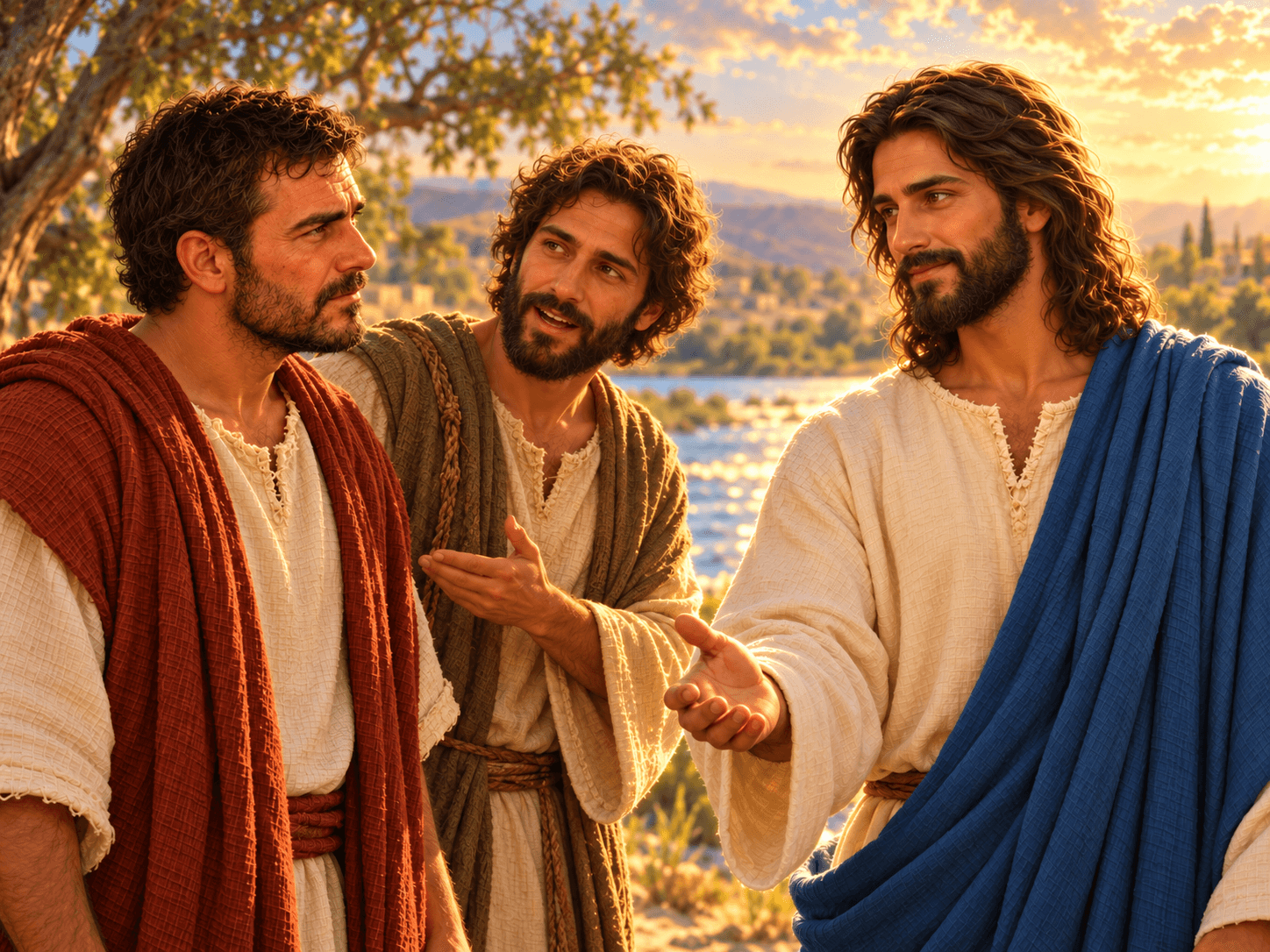
Illustrated scene from Peter's story: Andrew Brings Simon to Jesus (John 1:40–42)
Meet the people of the Bible
Follow their lives in order, with illustrated scenes and Bible passages that tell their stories.
 Peter

Photo: Photochrom print, Library of Congress Prints and Photographs Division (LCCN 2002725045). License: Public domain in the United States; Library of Congress states no known restrictions on publication. Source. Location: Nazareth, Israel; print preserved by the Library of Congress. Resized for the web.
Explore the places of the Bible
See where biblical events happened, why each place matters, and what archaeology helps us understand.
Nazareth
The small town in Galilee where Jesus grew up.
Get full access with one subscription
Explore the people and places of the Bible. Read summaries of every book, with images and clear explanations covering every chapter. Access all these features and our Bible study tools with one subscription.
See PlansAsk AI about Revelation 20:13
Ask a question about this verse and get a clear answer, with Bible references you can read for yourself.
Every Bible book, explained chapter by chapter
Explore summaries of every book of the Bible, with images and easy-to-understand explanations covering every chapter.
Keep studying Revelation 20:13
Related Bible verses
Key themes
Related topics
At a Glance — the Book of Revelation
- Author
- John the apostle
- Written
- Around AD 95
- Genre
- Apocalyptic prophecy
- Original Audience
- The seven churches of Asia Minor
Frequently Asked Questions
Quick, clear answers about this verse
What does Revelation 20:13 mean?
Revelation 20:13 describes the final judgment where all the dead are resurrected and judged by God based on their actions during their lives. It emphasizes that everyone, regardless of how or where they died, will face accountability for their deeds.
What is the significance of 'death and hell' in Revelation 20:13?
In Revelation 20:13, 'death and hell' refer to the state and realm of the dead. This phrase indicates that all who have died, whether in the sea or in hell, will be resurrected for judgment.
What does 'judged according to their works' mean in Revelation 20:13?
'Judged according to their works' means that individuals will be evaluated based on their actions and choices made during their lives. This underscores the belief that our deeds have consequences in the afterlife.
How does Revelation 20:13 relate to accountability?
Revelation 20:13 emphasizes accountability by stating that everyone will be judged for their actions. It serves as a reminder that our choices in life matter and will be assessed in the final judgment.
Daily Verse — straight to your inbox
A verse and a 2-sentence plain-English explanation, every morning. Free. Unsubscribe anytime.