What Does Deuteronomy 31:6 Mean?
Deuteronomy 31:6 meaning: people want encouragement about God's presence and faithfulness when facing fear or difficult transitions.
Deuteronomy in Focus
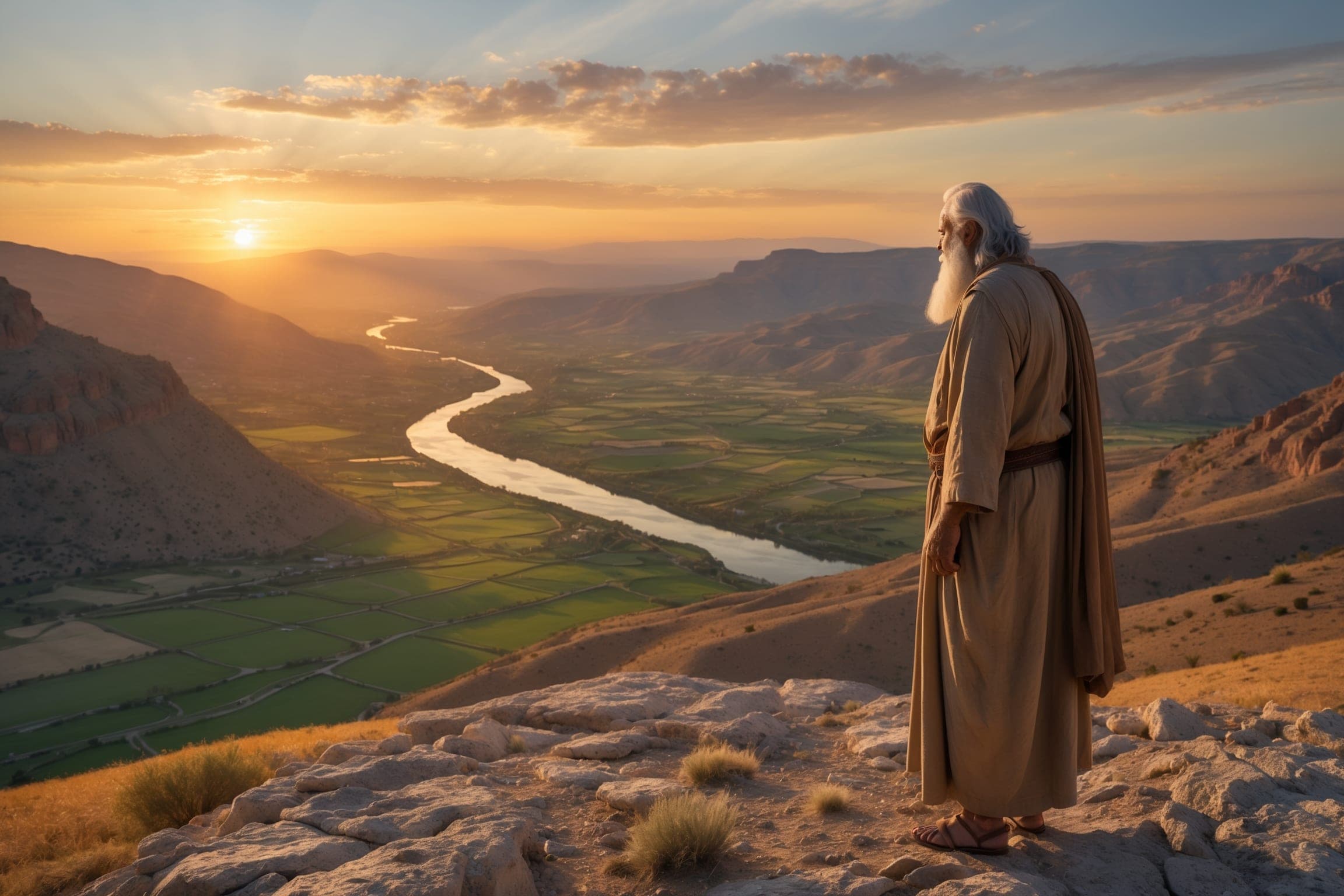
Picture Moses, 120 years old, standing before the vast assembly of Israel at the edge of the Promised Land, knowing these are among his final words to the people he has led for four decades. The weight of impending transition hangs heavy—Joshua will soon take command, Moses will climb Mount Nebo to die, and the Israelites must cross Jordan to face the formidable Canaanite nations without their legendary leader. Moses addresses not just the people but Joshua directly, using the Hebrew imperatives *chazaq* and *amats*—words that carry the force of military preparation, demanding both physical strength and inner resolve. The phrase "fear not, nor be afraid" employs two different Hebrew roots (*yare'* and *arats*) to encompass every shade of terror, from rational caution to paralyzing dread. But the true power lies in Moses' declaration about divine presence: the Hebrew *lo yarpeka* ("he will not fail thee") literally means God will never slacken his grip or let his hands go slack in helping them. When Moses promises God "will not forsake thee" (*lo ya'azveka*), he uses language that echoes the covenant faithfulness running throughout Israel's story—the same steadfast commitment that brought them out of Egypt will carry them into Canaan. The repetition of "he it is" (*hu*) serves as emphatic pointing: *this* God, the one you know, the one whose works you have witnessed, will be your companion in conquest.
Moses delivers his final address to Israel in the plains of Moab, preparing them for life in the Promised Land without him. These words come near the end of his farewell discourse, immediately after he has finished writing down the law and giving it to the priests and elders. The surrounding chapters detail the transition of leadership to Joshua and Moses' final prophetic blessing over the tribes.
When facing overwhelming challenges or major life transitions, this verse reminds us that courage isn't the absence of fear but acting in faith despite legitimate concerns. The promise of God's unfailing presence transforms how we approach difficulties—not as isolated individuals relying solely on our strength, but as people accompanied by divine faithfulness that has proven reliable throughout history.
Read the full chapter: Deuteronomy 31 →
Clear Bible Translation
Modern EnglishBe strong and courageous. Don't be afraid of them or let them intimidate you, because the LORD your God is the one going with you. He will never fail you or abandon you."
King James Version
Be strong and of a good courage, fear not, nor be afraid of them: for the LORD thy God, he it is that doth go with thee; he will not fail thee, nor forsake thee.
Connected Passages
- Joshua 1:9 →Connects divine presence with divine courage
- Psalms 23:4 →Also explores divine presence
- Exodus 14:14 →Connects divine presence with divine warfare
- Isaiah 40:31 →Connects divine presence with divine strength
Reader Questions
- What is the historical background of Deuteronomy 31:6?
- Moses spoke these words to the Israelites around 1406 BC in the plains of Moab, just before his death and their entry into Canaan under Joshua's leadership.
- What is the main theme of Deuteronomy 31:6?
- The primary theme is divine presence. Related themes include courage and faithfulness and fear.
- Where is Deuteronomy 31:6 in the Bible?
- Deuteronomy, chapter 31, verse 6. Read Deuteronomy 31 →
Daily Verse — straight to your inbox
A verse and a 2-sentence plain-English explanation, every morning. Free. Unsubscribe anytime.