What Does Joshua 24:15 Mean?
Joshua 24:15 meaning: what does 'choose this day whom you will serve' mean and how Joshua's declaration about serving the Lord applies to making spiritual commitments
King James Version
And if it seem evil unto you to serve the LORD, choose you this day whom ye will serve; whether the gods which your fathers served that were on the other side of the flood, or the gods of the Amorites, in whose land ye dwell: but as for me and my house, we will serve the LORD.
Clear Bible Translation
Modern EnglishAnd if it seems evil to you to serve the LORD, then choose today whom you will serve—whether the gods your ancestors served beyond the river, or the gods of the Amorites, in whose land you now live. But as for me and my household, we will serve the LORD.
Language, Structure, and Intent
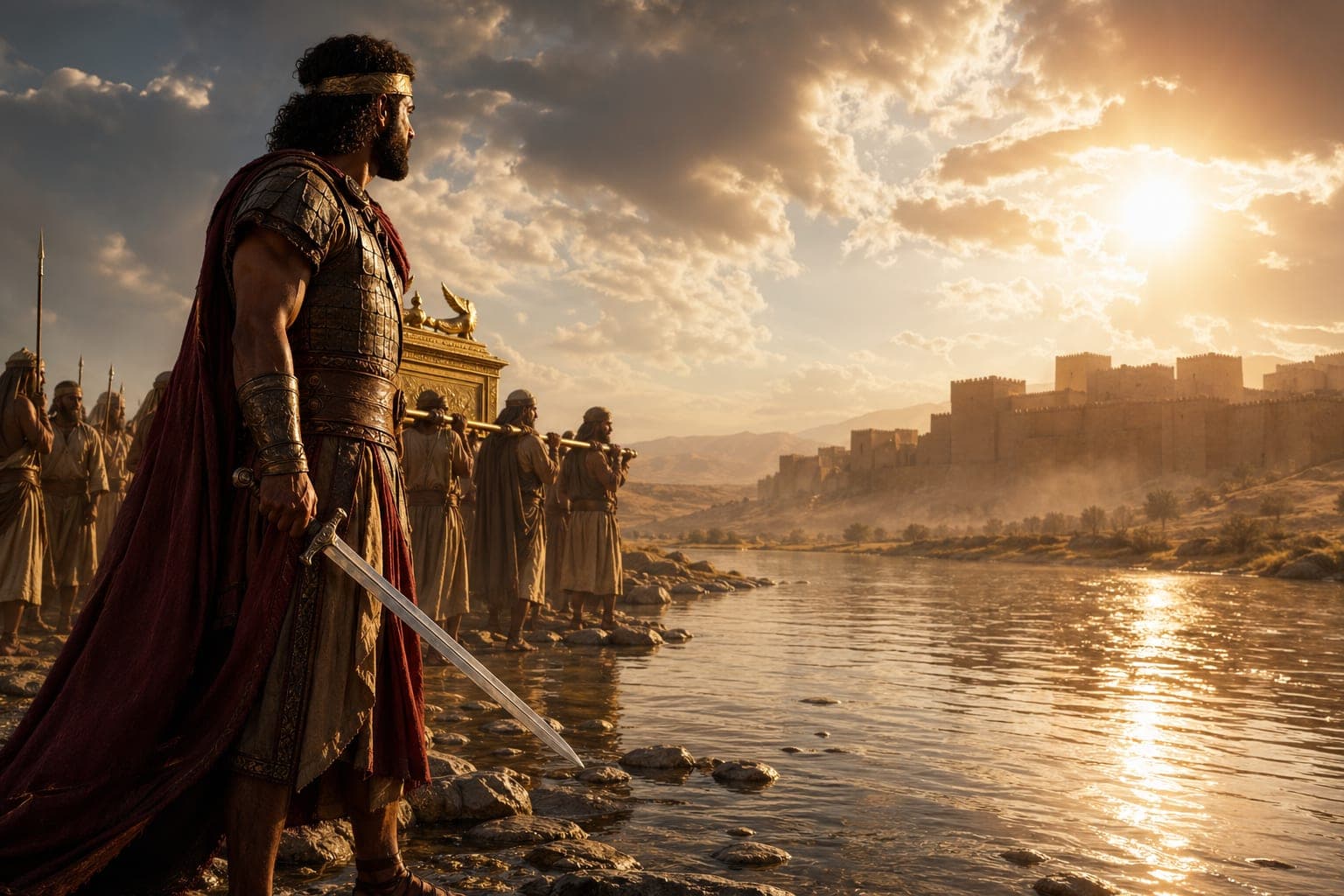
Joshua stands at the end of his life, having led Israel through the conquest of Canaan, and delivers this culminating challenge at Shechem—a site already sacred from Abraham's time. The Hebrew word for "choose" (bahar) carries the weight of deliberate selection, the same term used for God's choosing of Israel. Joshua presents stark alternatives: the ancestral gods from Mesopotamia ("beyond the flood" refers to the Euphrates) or the Canaanite deities they now live among. His declaration "as for me and my house" uses the emphatic Hebrew construction weʾanoki ubeiti, creating an unshakeable personal manifesto. The verb "serve" (ʿabad) appears seven times in this chapter, emphasizing that worship always involves submission and labor—there is no neutral ground. Joshua's ultimatum forces Israel to confront the reality that syncretism is actually apostasy. The phrase "this day" (hayom hazzeh) creates urgency; spiritual decisions cannot be indefinitely postponed without consequence.
This speech occurs during Joshua's final address to Israel's tribal leaders at Shechem, after reviewing their history from Abraham to the conquest. Joshua has just recounted God's faithfulness through the exodus, wilderness wandering, and military victories. Following this challenge, the people will repeatedly affirm their commitment to Yahweh, though Joshua warns them they cannot actually fulfill such promises. The ceremony concludes with covenant renewal and the setting up of a stone witness.
Joshua delivered this address near the end of his life, likely around 1390 BC, as Israel's military campaigns in Canaan concluded and the tribes prepared to settle their inherited territories.
Read the full chapter: Joshua 24 →
Present-Day Relevance
Every generation faces the choice between exclusive devotion to God and the cultural gods of their time—whether materialism, nationalism, or self-determination. Joshua's example demonstrates that spiritual leadership begins with personal commitment that influences one's household and extends outward to the community.
Thematic Connections
- Joshua 1:9 →Connects choice with divine courage
- Exodus 20:3 →Connects choice with monotheism
- Romans 12:2 →Connects choice with transformation
Key Questions Answered
- What is the main theme of Joshua 24:15?
- The primary theme is choice. Related themes include covenant loyalty and spiritual leadership and exclusive worship.
- Why is Joshua 24:15 significant?
- Every generation faces the choice between exclusive devotion to God and the cultural gods of their time—whether materialism, nationalism, or self-determination. Joshua's example demonstrates that spiritual leadership begins with personal commitment that influences one's household and extends outward to the community.
- Where can I find Joshua 24:15?
- Joshua, chapter 24, verse 15. Read Joshua 24 →
Daily Verse — straight to your inbox
A verse and a 2-sentence plain-English explanation, every morning. Free. Unsubscribe anytime.