What Does Exodus 20:3 Mean?
Exodus 20:3 meaning: what does it mean to have no other gods before the Lord
King James Version
Thou shalt have no other gods before me.
Clear Bible Translation
Modern English"You must have no other gods besides me.
Historical and Literary Context
Moses received and recorded this commandment around 1446 BC at Mount Sinai, approximately three months after leading Israel out of Egyptian bondage.
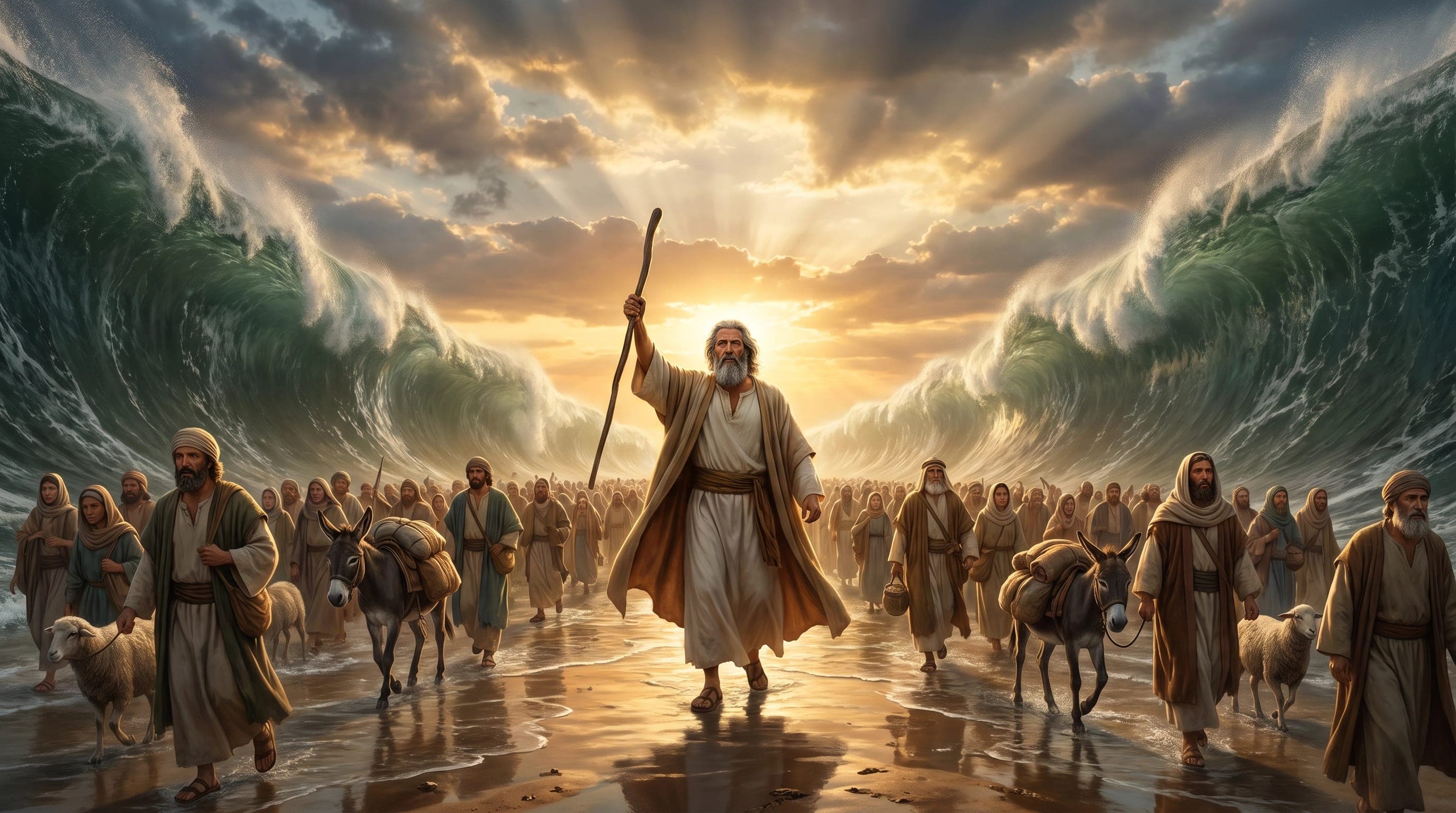
Lightning split Sinai's peak as the Israelites trembled at the mountain's base, their hearts pounding with terror and wonder. They had witnessed Yahweh's devastating power against Egypt's gods—Hapi of the Nile turned to blood, Ra eclipsed by darkness, the sacred bulls struck dead. Now their Deliverer spoke the first commandment that would reshape human understanding of divine reality. The Hebrew phrase 'al-panay literally means 'upon my face' or 'in my presence,' suggesting not merely a prohibition against worship of other deities, but an impossibility—no other gods can exist where Yahweh's face shines. This wasn't religious tolerance or henotheism, where multiple gods coexist in a pantheon. Yahweh was claiming absolute, exclusive sovereignty over all reality. The traumatized slaves who had known only the polytheistic chaos of Egypt suddenly encountered the one God who brooks no rivals, shares no throne, and demands total allegiance.
Moses stands as mediator between the terrified Israelites and the thundering voice of Yahweh at Mount Sinai, three months after the Exodus. The people have just witnessed God's theophany with earthquakes, fire, and thick darkness covering the mountain. These opening words launch the Ten Commandments, establishing the foundation for Israel's covenant relationship. The first four commandments address humanity's relationship with God directly, while the remaining six govern human relationships.
Read the full chapter: Exodus 20 →
Living This Out
In our age of competing ideologies, career ambitions, and material pursuits, this commandment challenges every divided loyalty. Whatever demands our ultimate allegiance—whether success, security, or even family—becomes a functional god that God will not tolerate.
Thematic Connections
- John 14:6 →Connects monotheism with exclusive salvation
- Genesis 1:1 →Connects monotheism with creation
- Joshua 1:9 →Connects monotheism with divine courage
Key Questions Answered
- What is the main theme of Exodus 20:3?
- The primary theme is monotheism. Related themes include exclusive worship and divine sovereignty and idolatry.
- Why is Exodus 20:3 significant?
- In our age of competing ideologies, career ambitions, and material pursuits, this commandment challenges every divided loyalty. Whatever demands our ultimate allegiance—whether success, security, or even family—becomes a functional god that God will not tolerate.
- Where can I find Exodus 20:3?
- Exodus, chapter 20, verse 3. Read Exodus 20 →
Daily Verse — straight to your inbox
A verse and a 2-sentence plain-English explanation, every morning. Free. Unsubscribe anytime.