What Does Matthew 16:26 Mean?
Matthew 16:26 meaning: what does Jesus mean about gaining the world but losing your soul
Clear Bible Translation
Modern EnglishWhat good is it if someone gains the whole world but loses his own soul? What could anyone offer in exchange for his soul?
King James Version
For what is a man profited, if he shall gain the whole world, and lose his own soul? or what shall a man give in exchange for his soul?
Historical and Literary Context
Matthew wrote this Gospel around 80-85 AD for a primarily Jewish-Christian audience wrestling with the cost of following Jesus in an increasingly hostile environment.
Jesus frames this penetrating question after predicting his own death and declaring that his followers must take up their cross. The stark contrast he draws cuts to the heart of discipleship. The Greek word psyche, translated 'soul,' encompasses the entire person—one's true self, eternal identity, and relationship with God. Christ poses this as an economic riddle: what transaction could possibly balance the scales if you possessed every earthly treasure but forfeited your authentic self? The verb 'lose' (zēmioō) carries the weight of permanent damage or destruction, suggesting an irreversible spiritual bankruptcy. This isn't merely about missing heaven while enjoying earth—it's about the fundamental impossibility of finding genuine fulfillment through material accumulation when the soul remains empty. The second question intensifies the impossibility: no conceivable payment exists for a lost soul because the soul itself is the only currency that matters in God's economy.
Jesus has just revealed to his disciples that he must suffer, die, and rise again. When Peter rebukes him for speaking of death, Jesus calls him 'Satan' for setting his mind on human things rather than God's purposes. Christ then announces the cost of discipleship: self-denial, cross-bearing, and following him even unto death. These penetrating questions about gaining the world but losing one's soul serve as the theological foundation for why such sacrifice makes perfect sense.
Read the full chapter: Matthew 16 →
Living This Out
Every career decision, relationship choice, and financial pursuit becomes a soul transaction in light of Jesus' words. The question forces us to evaluate whether our ambitions are expanding or diminishing our authentic selves before God, challenging the assumption that external success equals human flourishing.
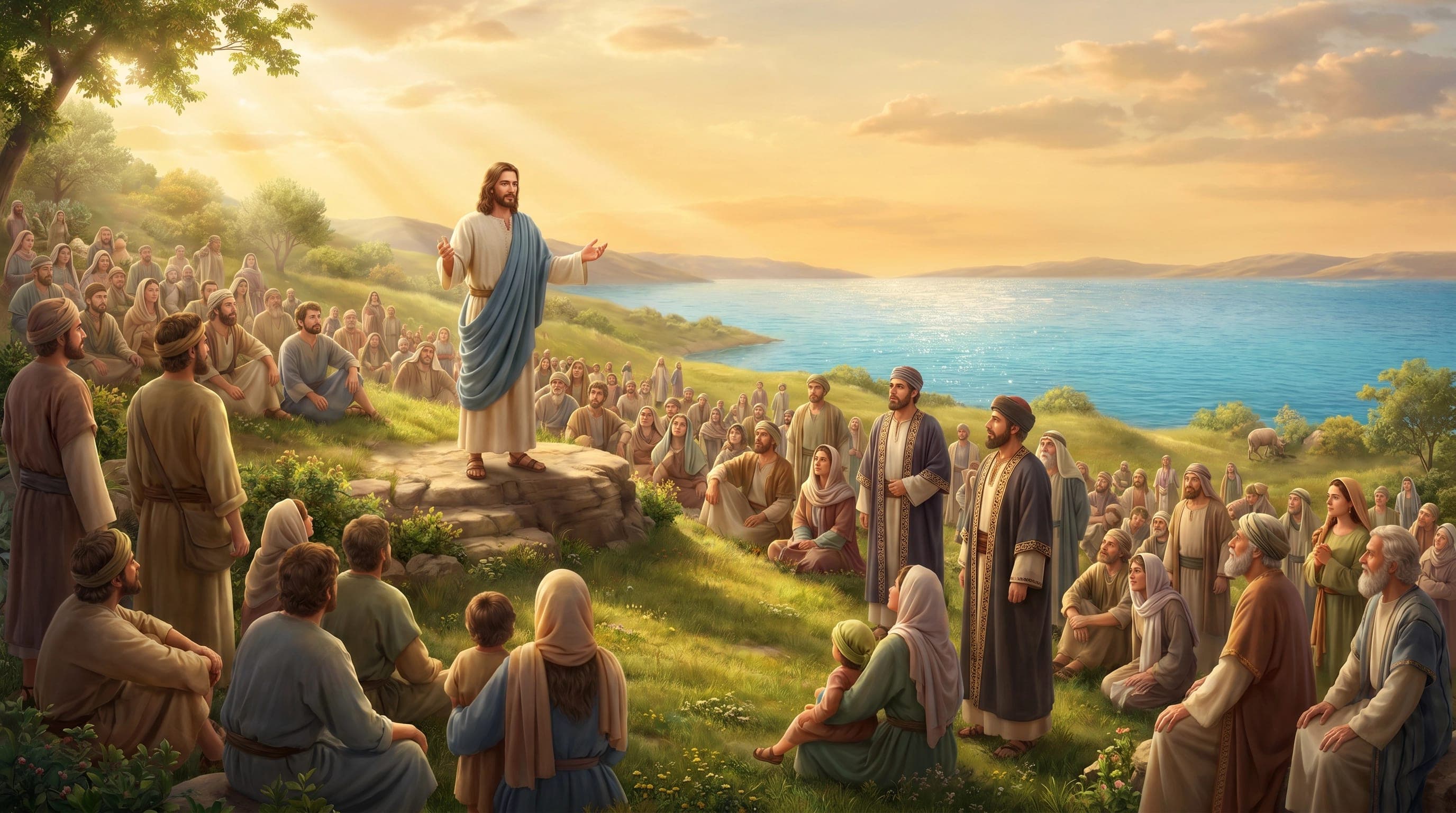
The Book of Matthew
Matthew 1: The Generation and Birth of Jesus Christ
The book begins with the generation of Jesus Christ, the son of David, the son of Abraham. It records the generations from Abraham to David, from David until the carrying away into Babylon, and from the carrying away into Babylon unto Christ, each being fourteen generations. The genealogy concludes with Jacob begetting Joseph, the husband of Mary, of whom was born Jesus, who is called Christ.
Unlock the full Matthew summary
Continue reading every chapter — themes, structure, and turning points.
The complete summary of Matthew — a chapter-by-chapter breakdown covering all 28 chapters.
What you get
Every chapter of Matthew summarized in clear, modern English
How each section connects — narrative flow, key themes, and turning points
Permanent access — read anytime, on any device
All 66 book summaries • unlimited AI tools • $99/year after trial
ClearBible summaries are proprietary content and may not be copied, republished, or resold.
Connected Passages
- Matthew 11:28 →Connects eternal value with divine rest
- Romans 12:2 →Connects eternal value with transformation
- Philippians 4:13 →Connects eternal value with divine strength
Reader Questions
- What is the historical background of Matthew 16:26?
- Matthew wrote this Gospel around 80-85 AD for a primarily Jewish-Christian audience wrestling with the cost of following Jesus in an increasingly hostile environment.
- What is the main theme of Matthew 16:26?
- The primary theme is eternal value. Related themes include discipleship and spiritual priorities and sacrifice.
- Where is Matthew 16:26 in the Bible?
- Matthew, chapter 16, verse 26. Read Matthew 16 →
Daily Verse — straight to your inbox
A verse and a 2-sentence plain-English explanation, every morning. Free. Unsubscribe anytime.