What Does Matthew 22:37 Mean?
Matthew 22:37 meaning: what it means to love God with heart, soul, and mind
Clear Bible Translation
Modern EnglishJesus answered, "'Love the Lord your God with all your heart, with all your soul, and with all your mind.'
King James Version
Jesus said unto him, Thou shalt love the Lord thy God with all thy heart, and with all thy soul, and with all thy mind.
Explanation and Context
When a Pharisee tested Jesus about the greatest commandment, Jesus reached back to the Shema—the ancient prayer every devout Jew recited twice daily from Deuteronomy 6:5. But He wasn't merely quoting Scripture; He was revealing the heart of covenant relationship with God. The threefold repetition of 'all' (heart, soul, mind) demands complete devotion, not compartmentalized religion. This wasn't a burden but the joyful response of a people who had experienced God's faithful love.
Matthew wrote this Gospel around 80-90 AD for Jewish Christians struggling to understand their relationship to Judaism and the broader Gentile church.
A lawyer from the Pharisees posed this question to test Jesus, likely hoping to trap Him in theological controversy about the relative importance of the 613 commandments. Jesus responded by citing the Shema, then immediately added the second commandment about loving neighbors (verse 39). Matthew presents this exchange as part of a series of confrontations during Jesus' final week, where religious leaders repeatedly challenged His authority.
True spirituality cannot be divided into sacred and secular compartments—God claims every thought, emotion, and choice. This commandment exposes the futility of trying to love God while withholding parts of ourselves from His lordship.
Read the full chapter: Matthew 22 →
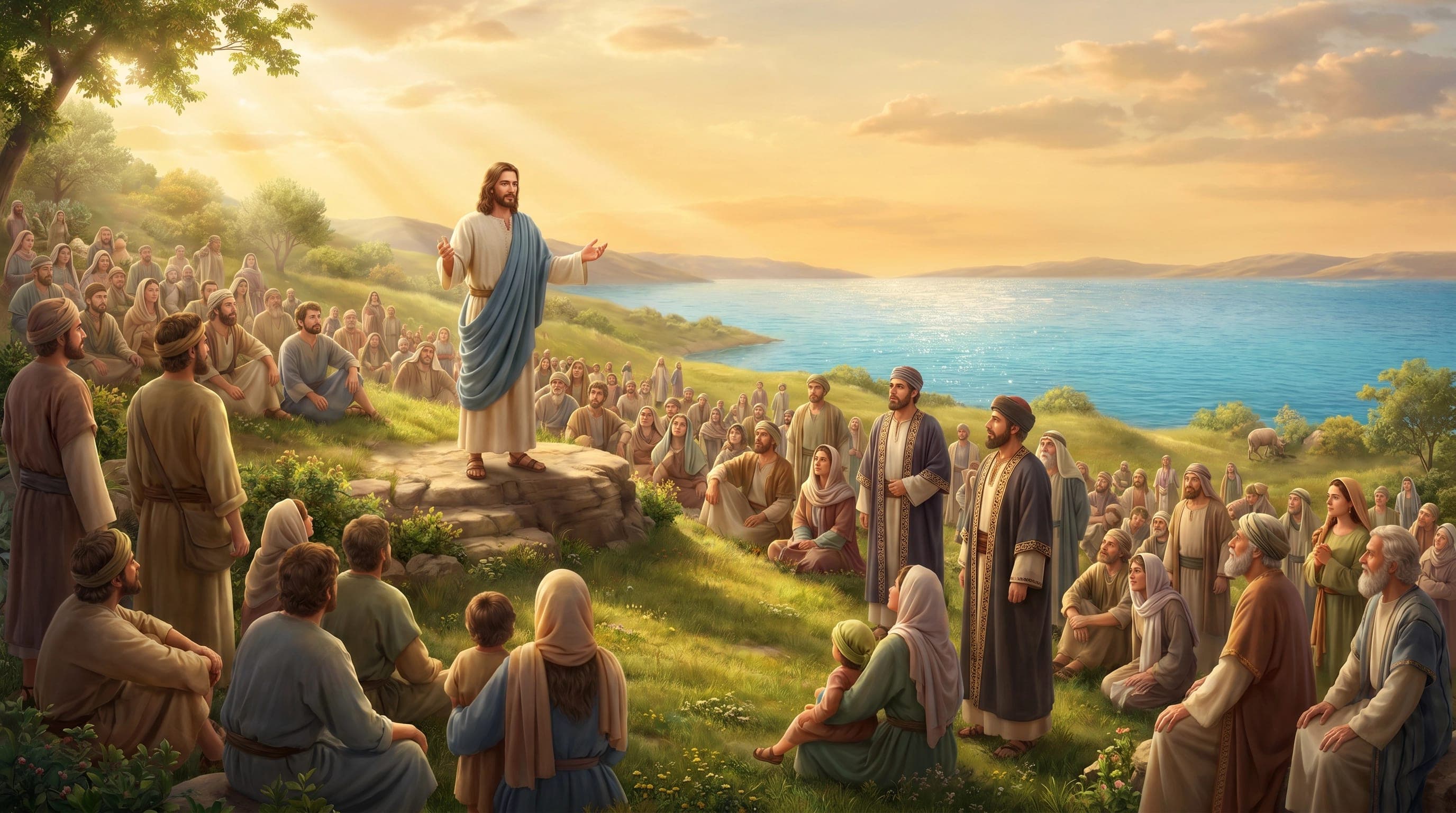
The Book of Matthew
Matthew 1: The Generation and Birth of Jesus Christ
The book begins with the generation of Jesus Christ, the son of David, the son of Abraham. It records the generations from Abraham to David, from David until the carrying away into Babylon, and from the carrying away into Babylon unto Christ, each being fourteen generations. The genealogy concludes with Jacob begetting Joseph, the husband of Mary, of whom was born Jesus, who is called Christ.
Unlock the full Matthew summary
Continue reading every chapter — themes, structure, and turning points.
The complete summary of Matthew — a chapter-by-chapter breakdown covering all 28 chapters.
What you get
Every chapter of Matthew summarized in clear, modern English
How each section connects — narrative flow, key themes, and turning points
Permanent access — read anytime, on any device
All 66 book summaries • unlimited AI tools • $99/year after trial
ClearBible summaries are proprietary content and may not be copied, republished, or resold.
Connected Passages
- Leviticus 19:18 →Connects covenant love with love
- Exodus 20:3 →Connects covenant love with monotheism
- John 14:6 →Connects covenant love with exclusive salvation
- Romans 12:2 →Connects covenant love with transformation
Reader Questions
- What is the historical background of Matthew 22:37?
- Matthew wrote this Gospel around 80-90 AD for Jewish Christians struggling to understand their relationship to Judaism and the broader Gentile church.
- What is the main theme of Matthew 22:37?
- The primary theme is covenant love. Related themes include wholehearted devotion and shema and greatest commandment.
- Where is Matthew 22:37 in the Bible?
- Matthew, chapter 22, verse 37. Read Matthew 22 →
Daily Verse — straight to your inbox
A verse and a 2-sentence plain-English explanation, every morning. Free. Unsubscribe anytime.