What Does Matthew 5:16 Mean?
Matthew 5:16 meaning: How should Christians live publicly so their faith points others to God rather than themselves?
Clear Bible Translation
Modern EnglishIn the same way, let your light shine in front of others so they can see the good things you do and give glory to your Father in heaven.
King James Version
Let your light so shine before men, that they may see your good works, and glorify your Father which is in heaven.
Verse Analysis
The theological claim here cuts to the heart of Christian witness: believers exist as visible manifestations of divine glory in a darkened world. Jesus employs the metaphor of light—already established in the preceding verses about being 'the light of the world'—to describe how authentic faith necessarily radiates outward through observable deeds. The Greek word *lampō* suggests not a hidden glow but a blazing forth that cannot be concealed. What makes this revolutionary is the ultimate purpose: human glorification of the heavenly Father rather than praise for the believer. The works themselves become transparent windows revealing God's character and power. This creates a profound theological tension—we must be seen, yet we must disappear. The verse assumes that good works flowing from genuine faith will be so distinctive, so contrary to human nature, that observers will instinctively recognize a supernatural source. Matthew's Jewish audience would have understood this as the fulfillment of Isaiah's vision of Israel becoming a light to the nations, now democratized to every follower of the Messiah.
This command appears within the Sermon on the Mount, immediately following Jesus's declarations about believers being salt and light. The broader section establishes the radical ethics of the kingdom, with this verse serving as a bridge between the identity statements ('you are the light') and the practical teachings that follow. Jesus has just warned against hiding one's light under a basket, making this a positive command for intentional visibility.
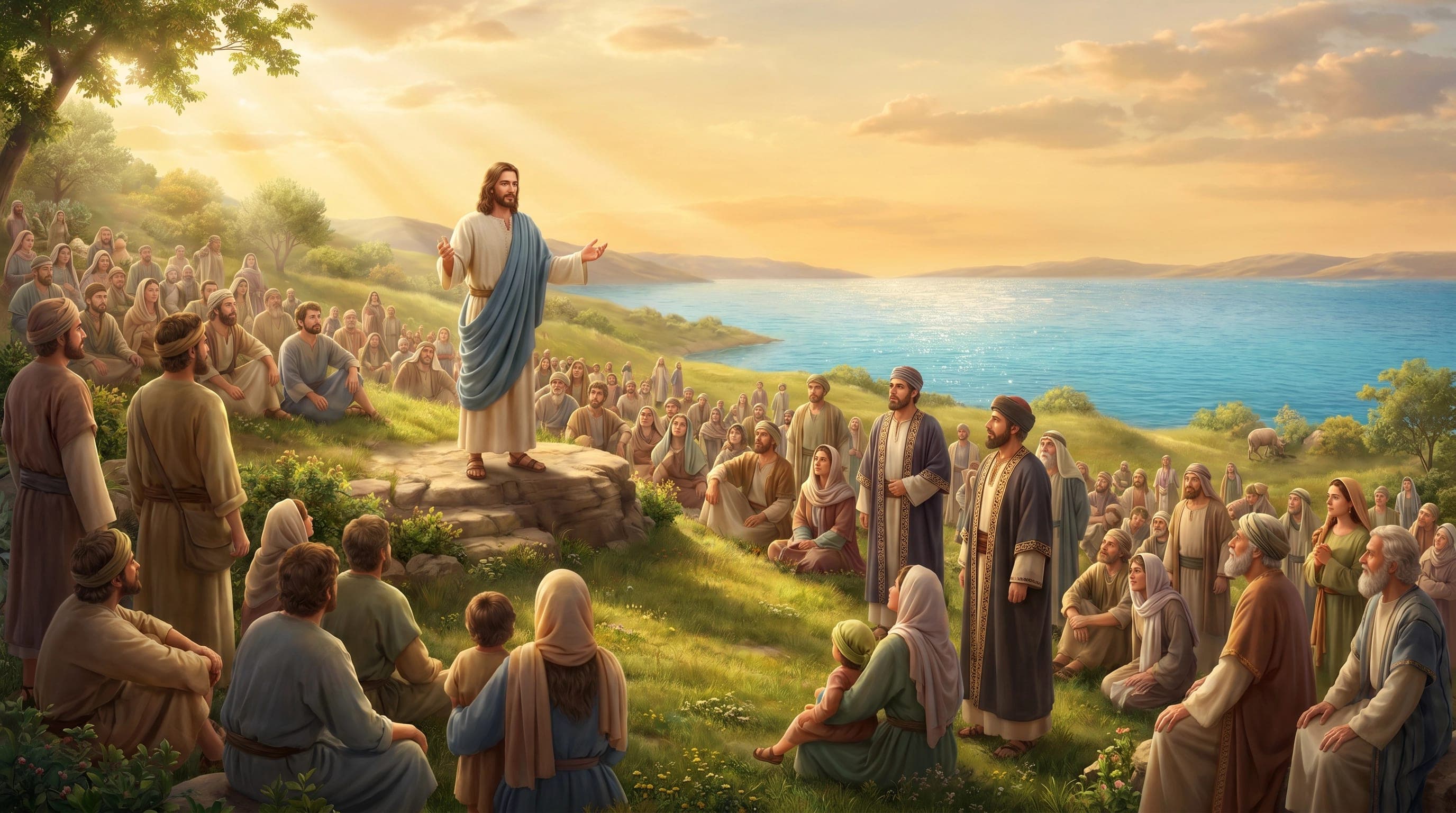
Matthew records Jesus teaching this on a mountainside in Galilee, likely early in His public ministry around 30 AD, addressing Jewish disciples who would soon carry the gospel beyond Israel's borders.
Read the full chapter: Matthew 5 →
Applying This to Daily Life
Modern believers face the same tension between humble service and necessary visibility—their character and choices must be distinctive enough that others recognize something beyond human goodness. The goal remains pointing others toward God rather than building personal reputation, which requires both boldness in good works and humility in receiving any recognition.
Related Scripture
- Matthew 28:19 →Connects christian witness with great commission
- Ephesians 2:8 →Connects christian witness with grace
- Matthew 11:28 →Connects christian witness with divine rest
Quick Answers
- What was happening when Matthew 5:16 was written?
- Matthew records Jesus teaching this on a mountainside in Galilee, likely early in His public ministry around 30 AD, addressing Jewish disciples who would soon carry the gospel beyond Israel's borders.
- What is the central message of Matthew 5:16?
- The primary theme is christian witness. Related themes include good works and discipleship and kingdom ethics.
- How does this verse apply to modern life?
- Modern believers face the same tension between humble service and necessary visibility—their character and choices must be distinctive enough that others recognize something beyond human goodness. The goal remains pointing others toward God rather than building personal reputation, which requires both boldness in good works and humility in receiving any recognition.
Daily Verse — straight to your inbox
A verse and a 2-sentence plain-English explanation, every morning. Free. Unsubscribe anytime.