What Does Matthew 7:7 Mean?
Matthew 7:7 meaning: what Jesus promised about prayer and whether God gives us whatever we ask for
Clear Bible Translation
Modern English"Ask, and it will be given to you. Seek, and you will find. Knock, and the door will be opened for you.
King James Version
Ask, and it shall be given you; seek, and ye shall find; knock, and it shall be opened unto you:
Verse Analysis
Midway through the Sermon on the Mount, Jesus delivers these three imperative commands that build upon one another with increasing intensity. The original Greek verbs—aiteo (ask), zeteo (seek), and krouo (knock)—each carry progressive urgency, moving from simple verbal request to active searching to persistent physical action. What appears as a blanket promise for getting whatever we want actually functions as instruction for approaching God with the confidence of children who know their Father's character. The verb tenses indicate continuous action: keep asking, keep seeking, keep knocking. The most striking element here is Jesus' assumption that his followers will naturally turn to God in their need—this isn't advice for occasional crisis moments but a description of normal kingdom living. The context of the surrounding verses about good gifts reveals that Jesus is teaching his disciples to expect God's generous response, not guaranteeing specific outcomes to specific requests.
Jesus spoke these words to his disciples during his early Galilean ministry, likely around AD 28-30. The hillside setting and intimate audience suggest this was targeted instruction for those already committed to following him.
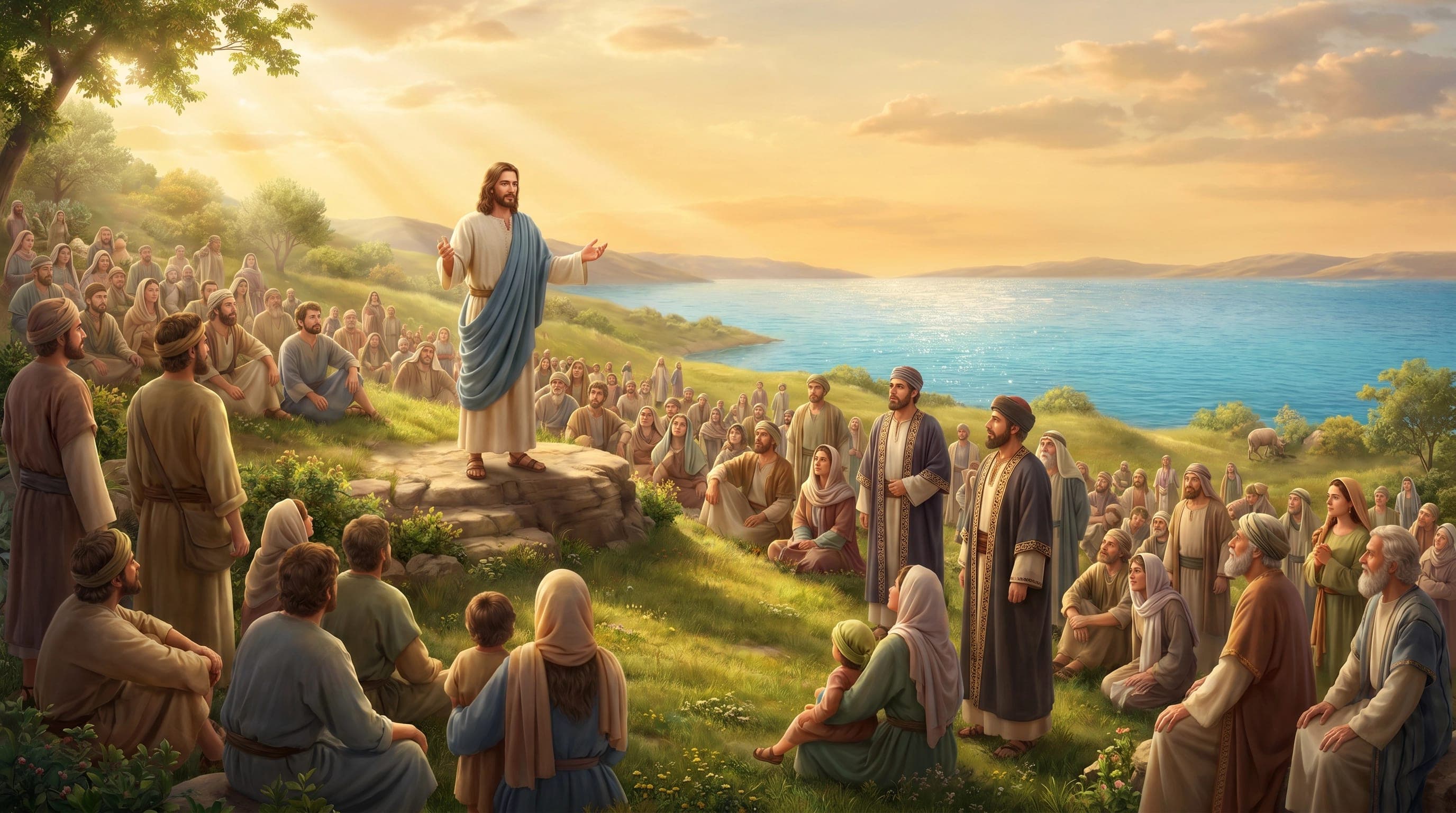
These words come near the end of Jesus' foundational teaching on kingdom life, delivered to his disciples on a Galilean hillside. The preceding verses warn against judging others, while the following verses compare God to earthly fathers who give good gifts to their children. Jesus is establishing the relational foundation that makes kingdom ethics possible—disciples can live generously and without anxiety because they know their heavenly Father's care. The entire sermon functions as a manifesto for life under God's reign, and these verses provide the prayer life that sustains such radical living.
Read the full chapter: Matthew 7 →
Applying This to Daily Life
Modern believers often struggle with unanswered prayer precisely because they've misunderstood this promise as a divine vending machine rather than an invitation into relationship. The three-fold pattern suggests that spiritual maturity involves learning to persist in prayer not to wear God down, but to align our hearts with his purposes through the process of seeking.
The Book of Matthew
Matthew 1: The Generation and Birth of Jesus Christ
The book begins with the generation of Jesus Christ, the son of David, the son of Abraham. It records the generations from Abraham to David, from David until the carrying away into Babylon, and from the carrying away into Babylon unto Christ, each being fourteen generations. The genealogy concludes with Jacob begetting Joseph, the husband of Mary, of whom was born Jesus, who is called Christ.
Unlock the full Matthew summary
Continue reading every chapter — themes, structure, and turning points.
The complete summary of Matthew — a chapter-by-chapter breakdown covering all 28 chapters.
What you get
Every chapter of Matthew summarized in clear, modern English
How each section connects — narrative flow, key themes, and turning points
Permanent access — read anytime, on any device
All 66 book summaries • unlimited AI tools • $99/year after trial
ClearBible summaries are proprietary content and may not be copied, republished, or resold.
Parallel Passages
- Matthew 11:28 →Connects prayer with divine rest
- Philippians 4:6 →Also explores prayer
- 1 Peter 5:7 →Connects prayer with divine care
- Jeremiah 29:11 →Connects prayer with divine sovereignty
Frequently Asked
- What is the context of Matthew 7:7?
- Jesus spoke these words to his disciples during his early Galilean ministry, likely around AD 28-30. The hillside setting and intimate audience suggest this was targeted instruction for those already committed to following him.
- Why does Matthew 7:7 matter today?
- Modern believers often struggle with unanswered prayer precisely because they've misunderstood this promise as a divine vending machine rather than an invitation into relationship. The three-fold pattern suggests that spiritual maturity involves learning to persist in prayer not to wear God down, but to align our hearts with his purposes through the process of seeking.
- Where is Matthew 7:7 located in Scripture?
- Matthew, chapter 7, verse 7. Read Matthew 7 →
Daily Verse — straight to your inbox
A verse and a 2-sentence plain-English explanation, every morning. Free. Unsubscribe anytime.