What Does Philippians 1:6 Mean?
Philippians 1:6 meaning: assurance that God will complete the spiritual transformation He began in believers
Clear Bible Translation
Modern EnglishI am confident of this very thing, that God, who began a good work in you, will carry it on until the day of Jesus Christ.
King James Version
Being confident of this very thing, that he which hath begun a good work in you will perform it until the day of Jesus Christ:
Language, Structure, and Intent
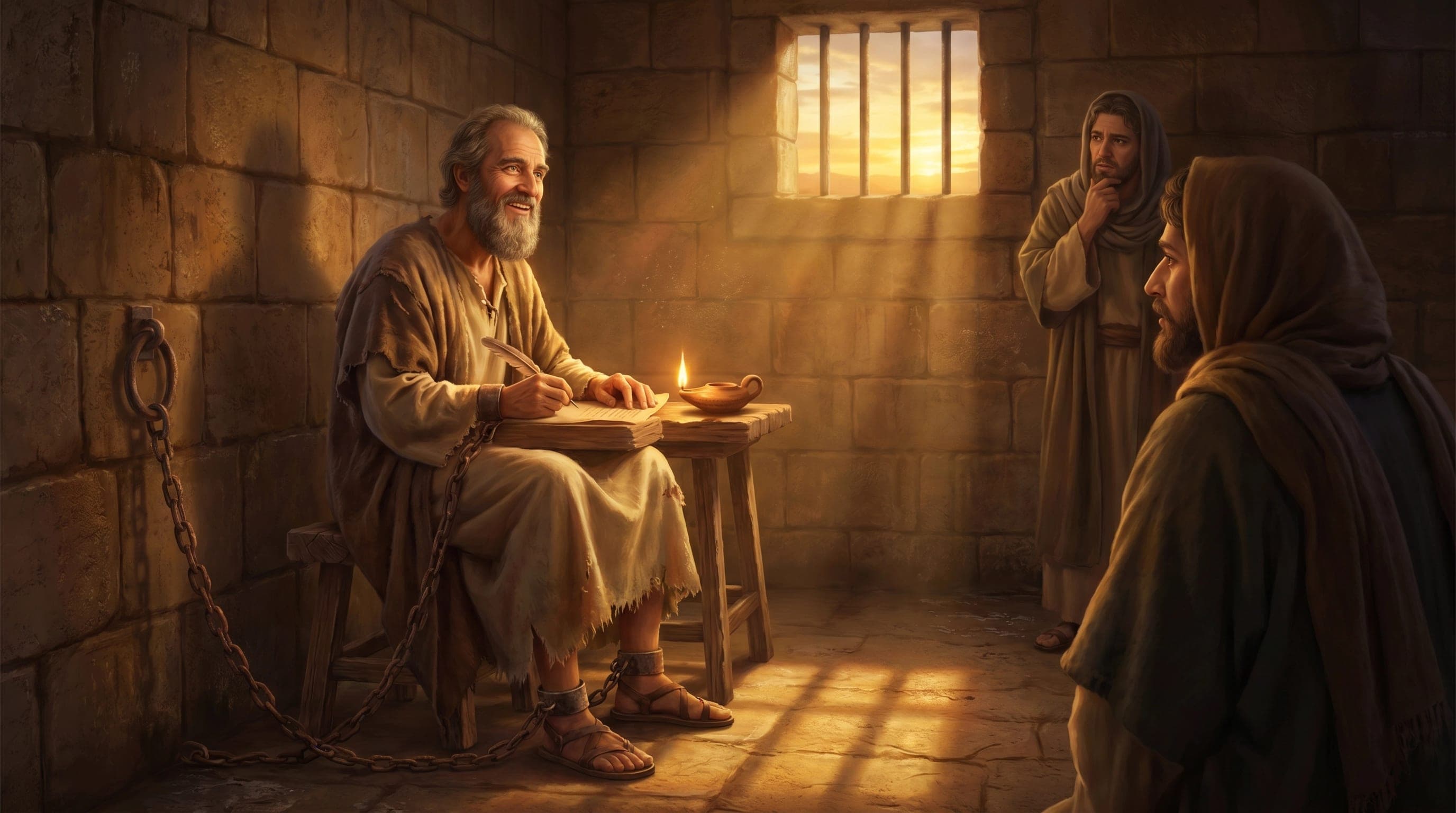
Paul's prison cell in Rome becomes the backdrop for one of Scripture's most audacious declarations about divine faithfulness. The apostle addresses believers facing persecution and uncertainty, yet his words pulse with unshakeable confidence. The Greek term πεποιθώς (pepoithos) indicates a settled conviction born from experience—Paul has witnessed God's transformative work repeatedly. When he speaks of God's 'good work' (ἔργον ἀγαθόν), he employs terminology that suggests both initial calling and ongoing sanctification, encompassing the entire scope of salvation from justification through glorification. The phrase 'will perform it' translates ἐπιτελέσει, a compound verb meaning to bring to completion or perfect fulfillment—the same root appears in Jesus's cry 'It is finished' (John 19:30). Paul anchors this divine guarantee in the Parousia itself: 'until the day of Jesus Christ' establishes an eschatological timeline that renders God's faithfulness non-negotiable. The passive construction subtly emphasizes that believers are recipients, not initiators, of this transformative process.
Paul opens his letter to the Philippians with thanksgiving and joy, despite writing from Roman imprisonment around AD 60-62. The immediately preceding verses express his deep affection for this church plant and his confidence in their partnership in the gospel. Following this declaration, Paul transitions into his personal circumstances, explaining how his chains have actually advanced the gospel's spread throughout the Praetorian Guard. The entire opening section establishes the theological foundation that will carry through the letter's themes of joy amid suffering and unity in mission.
Paul wrote Philippians during his first Roman imprisonment (c. AD 60-62), addressing the church he planted during his second missionary journey around AD 50.
Read the full chapter: Philippians 1 →
Present-Day Relevance
Believers wrestling with doubt about their spiritual progress or God's commitment to their growth can find anchor here. Paul's confidence becomes the believer's confidence—not in human effort or consistency, but in God's unwavering character and covenant faithfulness.
Scripture with Similar Themes
- Jeremiah 29:11 →Connects divine faithfulness with divine sovereignty
- Romans 8:28 →Connects divine faithfulness with providence
- Philippians 4:13 →Connects divine faithfulness with divine strength
Common Questions
- Who wrote Philippians 1:6 and when?
- Paul wrote Philippians during his first Roman imprisonment (c. AD 60-62), addressing the church he planted during his second missionary journey around AD 50.
- What themes does Philippians 1:6 address?
- The primary theme is divine faithfulness. Related themes include perseverance and sanctification and eschatology.
- What does the Bible say about divine faithfulness?
- Believers wrestling with doubt about their spiritual progress or God's commitment to their growth can find anchor here. Paul's confidence becomes the believer's confidence—not in human effort or consistency, but in God's unwavering character and covenant faithfulness.
Daily Verse — straight to your inbox
A verse and a 2-sentence plain-English explanation, every morning. Free. Unsubscribe anytime.