1 Corinthians 5:13
God judges those who are outside. Therefore, remove that wicked person from among you.
What 1 Corinthians 5:13 means
Plain-English insight for readers
1 Corinthians 5:13 means the church should leave the judging of outsiders to God and deal with open, ongoing sin among its own members. Paul tells the believers in Corinth to put one man out of their fellowship. God, not the church, is the judge of those who do not belong to it.
Paul wrote this letter to the church in Corinth, a city where he had helped start the church. Earlier in the chapter, he says a member was living with his father's wife, and the church had not acted (1 Corinthians 5:1–2). The KJV phrase "them that are without" refers to people outside the church. The verse does not explain how or when such a person might be welcomed back.
How to apply 1 Corinthians 5:13 to your life
This verse warns against two opposite mistakes. Do not spend energy condemning people outside the faith, since Paul says God judges them. Inside your church, though, open and unrepented sin should not be ignored to keep the peace. If you hold a role in church leadership, take discipline seriously, and handle it with care, as Jesus describes in Matthew 18:15–17.
In the King James Version
But them that are without God judgeth. Therefore put away from among yourselves that wicked person.
Ask about this verse
Ask anything about 1 Corinthians 5:13 and get a clear answer from Scripture.
Have a question about this verse? Explore it with ClearBible.
Premium answers your questions about any verse from Scripture itself, shows the verses it rests on, and opens Clear on every passage. You also get all 66 book summaries.
7 days free, then $99/year. Card required. Cancel anytime.
Explore more of the Bible
Learn the Bible through its people and places
Get to know the people in Scripture through illustrated stories, and explore the places where they lived and traveled.

Illustrated scene from Paul's story: The Stoning of Stephen (Acts 7:57–8:2)
Meet the people of the Bible
Follow their lives in order, with illustrated scenes and Bible passages that tell their stories.
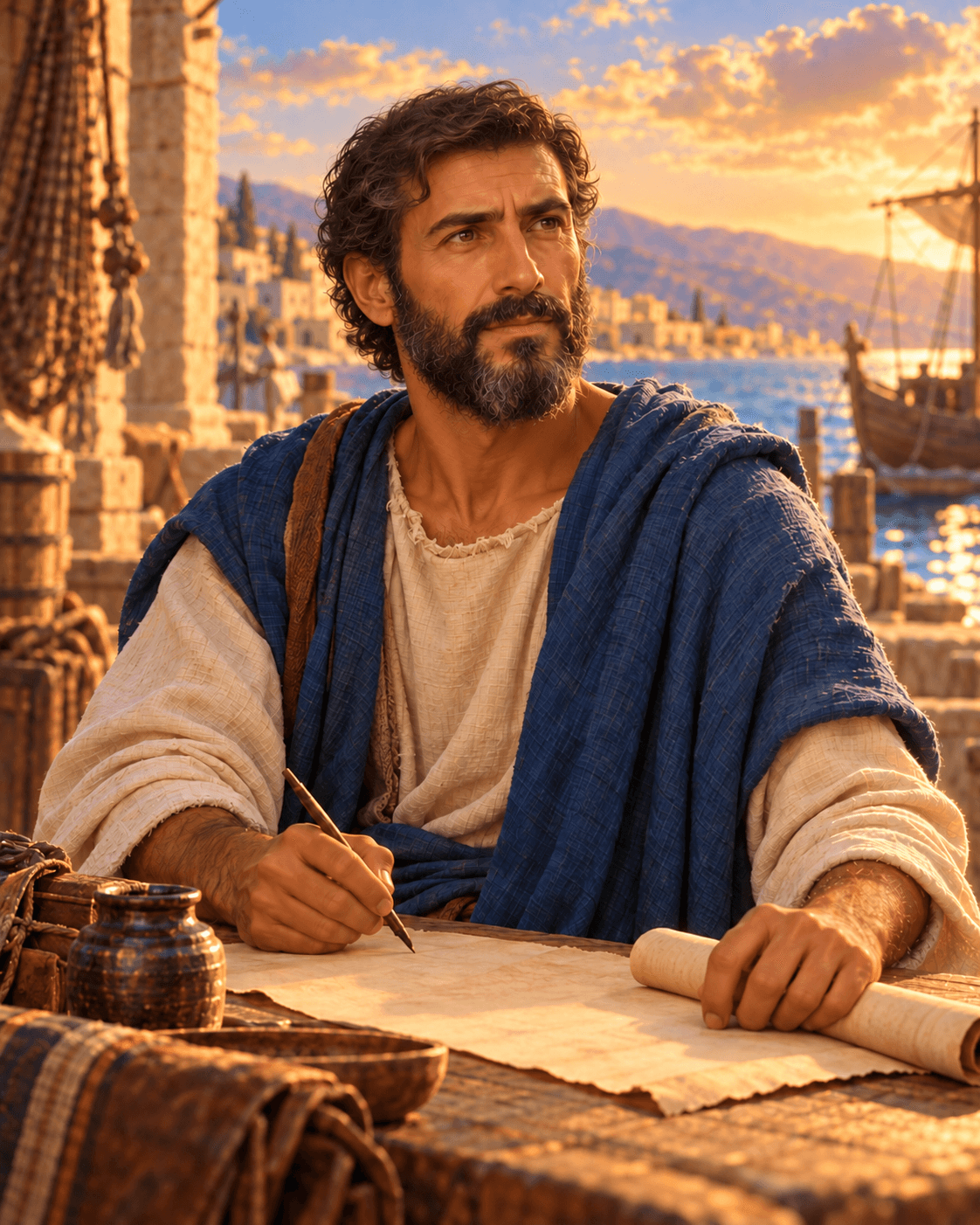 Paul

Photo: Gary Todd (Gary Lee Todd, Ph.D.), via Wikimedia Commons. License: CC0 1.0 Universal Public Domain Dedication. Source. Location: Southern end of the Temple Mount, Jerusalem Old City. Resized for the web.
Explore the places of the Bible
See where biblical events happened, why each place matters, and what archaeology helps us understand.
Jerusalem
David's capital, the city of the temple, and the place where Jesus died and rose again.
Every Bible book, explained chapter by chapter
Explore summaries of every book of the Bible, with images and easy-to-understand explanations covering every chapter.
Keep studying 1 Corinthians 5:13
Related Bible verses
Key themes
Related topics
At a Glance — the Book of 1 Corinthians
- Author
- Paul the apostle
- Written
- Around AD 55
- Genre
- Letter (epistle)
- Original Audience
- The church in Corinth
Frequently Asked Questions
Quick, clear answers about this verse
What does 1 Corinthians 5:13 mean?
Paul draws a line between outsiders, whom God judges, and church members, whom the church is responsible to correct. He tells the Corinthian believers to stop including a member who was openly living in serious sin.
What does "them that are without" mean in 1 Corinthians 5:13?
In the KJV, "without" means outside. Paul is talking about people who are not part of the church. He says in verse 12 that judging them is not his task or the church's task.
Who is "that wicked person" in 1 Corinthians 5:13?
It is the man described in 1 Corinthians 5:1, a church member who was living with his father's wife. Paul says the church should have removed him instead of tolerating it.
Is 1 Corinthians 5:13 quoting the Old Testament?
Yes, the command echoes a repeated phrase in Deuteronomy, such as Deuteronomy 17:7 and 22:21–24. There, Israel was told to remove evil from among the people. Paul applies that command to the church.
Daily Verse — straight to your inbox
A verse and a 2-sentence plain-English explanation, every morning. Free. Unsubscribe anytime.