Old Testament
2 Chronicles 3:10
Read the Bible in clear, modern English—easy to understand, faithful to the meaning, and written for everyday readers.
Inside the Most Holy Place, he made two cherubim of image work and overlaid them with gold.
Compare translations
And in the most holy house he made two cherubims of image work, and overlaid them with gold.
What 2 Chronicles 3:10 means
Plain-English insight for readers
In the innermost part of the temple, known as the Most Holy Place, two cherubim were crafted. These cherubim were not just ordinary figures; they were intricately designed and covered in gold, symbolizing purity and divine presence. The cherubim represented guardians of the sacred space, emphasizing the holiness of the area where God's presence dwelled. Their golden surface reflected light, creating a stunning visual that inspired awe. This craftsmanship highlighted the importance of beauty in worship and the reverence due to God. The cherubim served as a reminder of the connection between heaven and earth, inviting people to reflect on the divine. This act of creating such magnificent figures was a way to honor God and acknowledge His greatness. It also illustrated the significance of dedicating our best efforts to what we hold sacred, whether in our homes, communities, or personal lives. The cherubim were more than decorations; they were a profound expression of faith and devotion.
How to apply 2 Chronicles 3:10 to your life
Consider what you dedicate to your sacred spaces, whether physical or spiritual. Just as the cherubim were crafted with care, think about how you can honor what is important in your life. Invest time and effort into creating beauty and meaning in your surroundings and relationships. Reflect on how these elements can deepen your connection to what you value most. Your dedication can inspire others too, creating a ripple effect of reverence.
Curated for this public verse page. 2 Chronicles Summary
Learn the Bible through its people and places
Get to know the people in Scripture through illustrated stories, and explore the places where they lived and traveled.
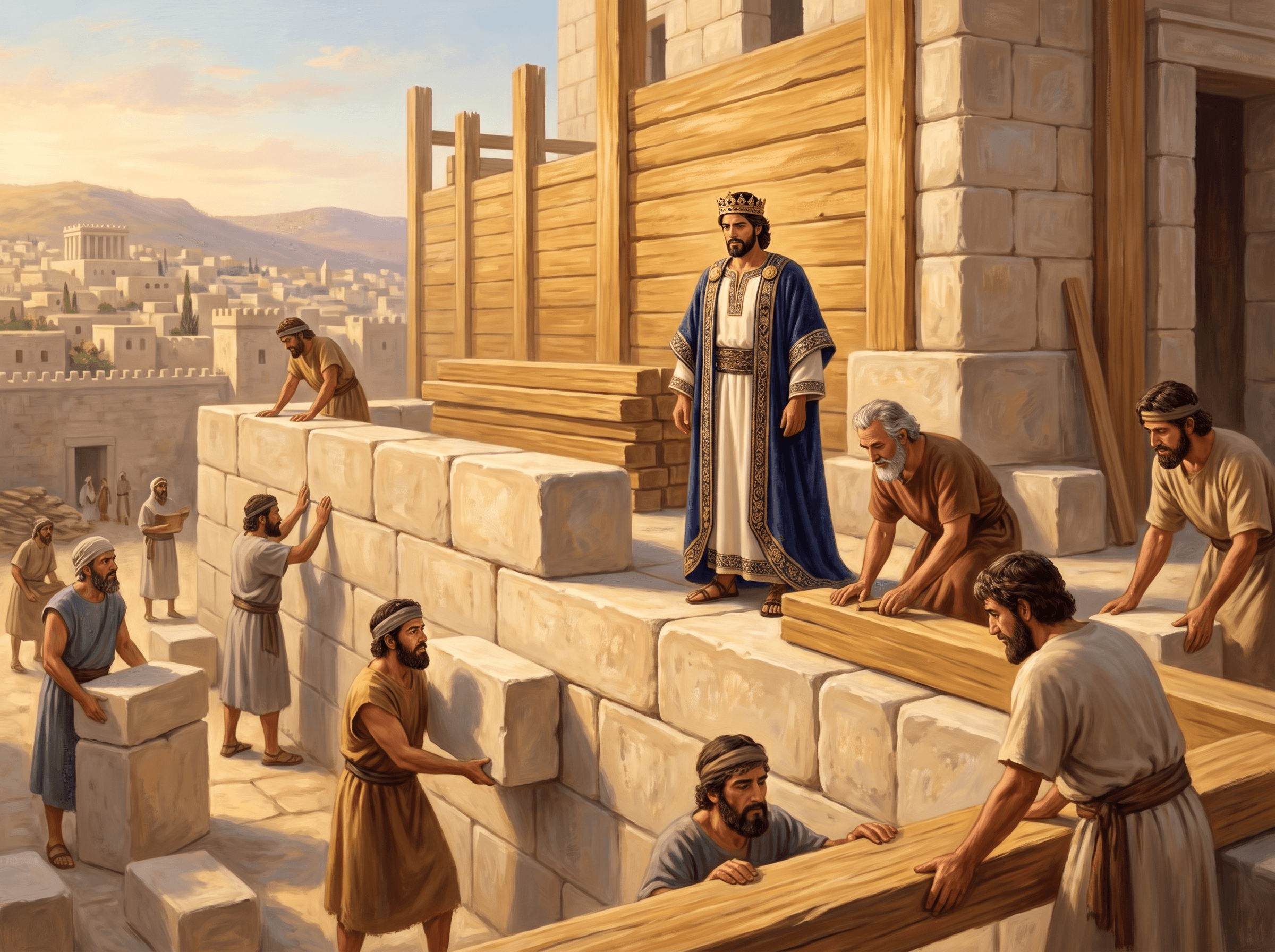
Illustrated scene from Solomon's story: Building the Temple (2 Chronicles 3:1–17)
Meet the people of the Bible
Follow their lives in order, with illustrated scenes and Bible passages that tell their stories.
 Solomon

Photo: Photochrom print, Library of Congress Prints and Photographs Division (LCCN 2002724987). License: Public domain in the United States; Library of Congress states no known restrictions on publication. Source. Location: Hebron, West Bank; print preserved by the Library of Congress. Resized for the web.
Explore the places of the Bible
See where biblical events happened, why each place matters, and what archaeology helps us understand.
Hebron
Where Abraham lived and buried Sarah, and where David was first made king.
Get full access with one subscription
Explore the people and places of the Bible. Read summaries of every book, with images and clear explanations covering every chapter. Access all these features and our Bible study tools with one subscription.
See PlansAsk AI about 2 Chronicles 3:10
Ask a question about this verse and get a clear answer, with Bible references you can read for yourself.
Every Bible book, explained chapter by chapter
Explore summaries of every book of the Bible, with images and easy-to-understand explanations covering every chapter.
Keep studying 2 Chronicles 3:10
Related Bible verses
Key themes
Related topics
At a Glance — the Book of 2 Chronicles
- Author
- Traditionally attributed to Ezra
- Written
- Around 430 BC
- Genre
- Historical narrative
- Original Audience
- Post-exilic Jews
Frequently Asked Questions
Quick, clear answers about this verse
What is the significance of the cherubim in 2 Chronicles 3:10?
The cherubim in 2 Chronicles 3:10 symbolize the divine presence and guardianship of God's holiness. Positioned in the Most Holy Place, they represent the connection between heaven and earth, emphasizing the sacredness of the space where God dwells. Their intricate design and gold overlay reflect beauty and reverence, highlighting the importance of honoring God through craftsmanship and devotion.
How does the craftsmanship of the cherubim relate to worship?
The craftsmanship of the cherubim illustrates the value of dedicating our best efforts to worship. By creating beautiful and intricate figures, the artisans demonstrated their reverence for God and the sacred space. This act of craftsmanship serves as a reminder that our worship should be intentional and reflect the significance of our relationship with the divine, inspiring awe and devotion.
What can we learn from the dedication of the cherubim in our lives?
The dedication shown in crafting the cherubim encourages us to invest time and effort into what we hold sacred in our own lives. Whether it's our homes, relationships, or spiritual practices, we can create beauty and meaning that honors our values. This commitment not only deepens our connection to what matters most but can also inspire those around us to cultivate their own sacred spaces.
Why were the cherubim covered in gold?
The gold overlay on the cherubim signifies purity, divinity, and the glory of God. Gold is often associated with value and beauty, and in this context, it enhances the visual impact of the cherubim, reflecting light and creating an awe-inspiring atmosphere in the Most Holy Place. This choice of material underscores the importance of honoring God with our best and recognizing His greatness.
Daily Verse — straight to your inbox
A verse and a 2-sentence plain-English explanation, every morning. Free. Unsubscribe anytime.