Old Testament
2 Chronicles 3:13
Read the Bible in clear, modern English—easy to understand, faithful to the meaning, and written for everyday readers.
Together, the wings of these cherubim stretched out 20 cubits. They stood on their feet, with their faces turned inward.
Compare translations
The wings of these cherubims spread themselves forth twenty cubits: and they stood on their feet, and their faces were inward.
What 2 Chronicles 3:13 means
Plain-English insight for readers
In this passage, we see a vivid description of the cherubim, which are angelic beings, positioned in the temple. Their wings stretched out to an impressive length of 20 cubits, showcasing their grandeur and the importance of their role. Standing on their feet, they faced inward, symbolizing protection and reverence for what was sacred. This imagery emphasizes the holiness of the space they inhabit. The cherubim serve as guardians, creating a sense of awe and respect for the divine presence. Their posture and orientation suggest a focus on the center, where the most sacred elements of the temple would be found. This scene invites us to reflect on the significance of reverence in our own lives and the spaces we create for the sacred. It reminds us that, just as the cherubim protect the holy, we too can cultivate environments that honor what is meaningful to us. The beauty of this imagery encourages us to appreciate the divine in our surroundings and to approach our lives with a sense of wonder and respect.
How to apply 2 Chronicles 3:13 to your life
Consider how you can create a sacred space in your life, whether through meditation, prayer, or simply quiet reflection. Just as the cherubim protect the holy, think about what you value and how to honor it. Cultivating reverence can transform your everyday experiences into something meaningful and profound. Embrace the beauty around you and approach it with respect and awe. This can deepen your connection to the divine and to yourself.
Curated for this public verse page. 2 Chronicles Summary
Learn the Bible through its people and places
Get to know the people in Scripture through illustrated stories, and explore the places where they lived and traveled.
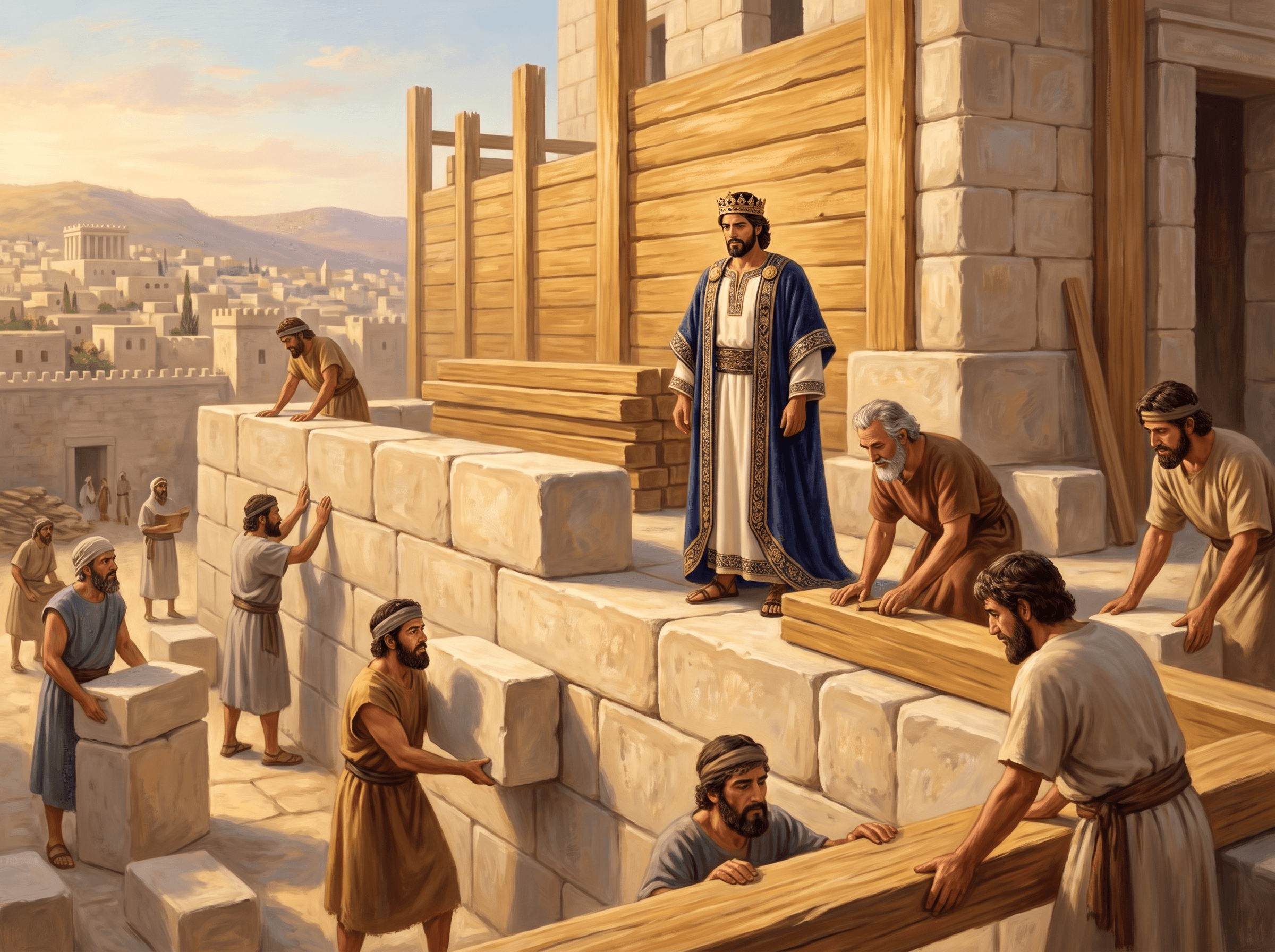
Illustrated scene from Solomon's story: Building the Temple (2 Chronicles 3:1–17)
Meet the people of the Bible
Follow their lives in order, with illustrated scenes and Bible passages that tell their stories.
 Solomon

Photo: Photochrom print, Library of Congress Prints and Photographs Division (LCCN 2002724987). License: Public domain in the United States; Library of Congress states no known restrictions on publication. Source. Location: Hebron, West Bank; print preserved by the Library of Congress. Resized for the web.
Explore the places of the Bible
See where biblical events happened, why each place matters, and what archaeology helps us understand.
Hebron
Where Abraham lived and buried Sarah, and where David was first made king.
Get full access with one subscription
Explore the people and places of the Bible. Read summaries of every book, with images and clear explanations covering every chapter. Access all these features and our Bible study tools with one subscription.
See PlansAsk AI about 2 Chronicles 3:13
Ask a question about this verse and get a clear answer, with Bible references you can read for yourself.
Every Bible book, explained chapter by chapter
Explore summaries of every book of the Bible, with images and easy-to-understand explanations covering every chapter.
Keep studying 2 Chronicles 3:13
Related Bible verses
Key themes
Related topics
At a Glance — the Book of 2 Chronicles
- Author
- Traditionally attributed to Ezra
- Written
- Around 430 BC
- Genre
- Historical narrative
- Original Audience
- Post-exilic Jews
Frequently Asked Questions
Quick, clear answers about this verse
What does 2 Chronicles 3:13 mean?
2 Chronicles 3:13 describes the cherubim in the temple, highlighting their impressive wingspan of 20 cubits and their posture of standing with faces turned inward. This imagery signifies their role as guardians of the sacred space, emphasizing the holiness and reverence of the temple.
What is the significance of cherubim in 2 Chronicles 3:13?
In this verse, cherubim symbolize protection and reverence for the divine presence within the temple. Their position and orientation reflect a focus on the sacred center, illustrating their role as guardians of what is holy.
What does the term 'cubits' refer to in 2 Chronicles 3:13?
A cubit is an ancient measurement, typically based on the length of a forearm, approximately 18 inches or 45 centimeters. In 2 Chronicles 3:13, the wings of the cherubim stretch out 20 cubits, indicating a significant span of about 30 feet.
How does 2 Chronicles 3:13 relate to creating sacred spaces today?
This verse encourages us to consider how we can create our own sacred spaces, much like the temple. By honoring what we value and cultivating environments of reverence, we can deepen our connection to the divine and enhance our everyday experiences.
Daily Verse — straight to your inbox
A verse and a 2-sentence plain-English explanation, every morning. Free. Unsubscribe anytime.