New Testament
Acts 14:17
Read the Bible in clear, modern English—easy to understand, faithful to the meaning, and written for everyday readers.
Yet he did not leave himself without witness, for he did good by giving you rain from heaven and fruitful seasons, filling your hearts with food and gladness."
Compare translations
Nevertheless he left not himself without witness, in that he did good, and gave us rain from heaven, and fruitful seasons, filling our hearts with food and gladness.
What Acts 14:17 means
Plain-English insight for readers
This verse highlights how God shows his presence and goodness in the world. Even when people may not recognize him, he provides evidence of his care through nature. The rain and the changing seasons are gifts that nourish us and bring joy. These blessings fill our hearts with happiness and satisfaction. They remind us that we are not alone and that there is a higher power at work. God's goodness is evident in the simple pleasures of life, like food and the beauty of nature. This verse encourages us to appreciate the everyday gifts we receive and recognize them as signs of God's love and provision. It invites us to reflect on how these blessings impact our lives and the joy they bring us, urging us to be grateful for the abundance around us. In essence, it teaches us to see the divine in the ordinary and to acknowledge the source of our joy and sustenance, which is God himself, who cares for us deeply and continuously provides for our needs and happiness.
How to apply Acts 14:17 to your life
Take a moment to appreciate the simple things in life, like a warm meal or a beautiful day. Recognize these as gifts that bring joy and nourishment. Cultivating gratitude can transform your perspective and deepen your connection to the world around you. Embrace the idea that these blessings are reminders of a greater love and care in your life.
Curated for this public verse page. Acts Summary
Learn the Bible through its people and places
Get to know the people in Scripture through illustrated stories, and explore the places where they lived and traveled.
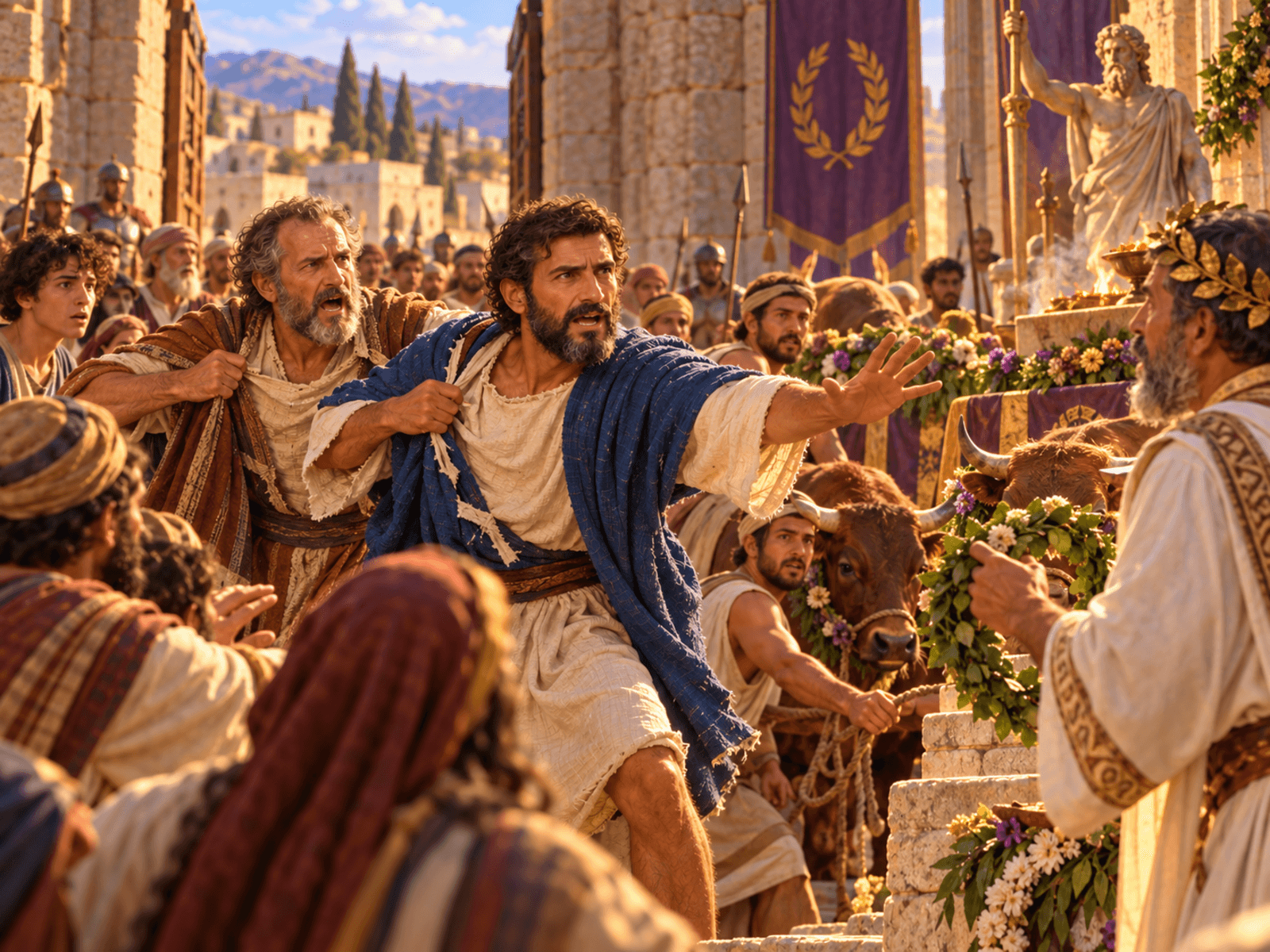
Illustrated scene from Paul's story: Mistaken for Gods at Lystra (Acts 14:1–18)
Meet the people of the Bible
Follow their lives in order, with illustrated scenes and Bible passages that tell their stories.
 Paul

Photo: zeevveez, via Wikimedia Commons. License: CC BY 2.0. Source. Location: Capernaum, on the northern shore of the Sea of Galilee. Resized for the web.
Explore the places of the Bible
See where biblical events happened, why each place matters, and what archaeology helps us understand.
Capernaum
Jesus' home base by the Sea of Galilee, and the town where Peter lived.
Get full access with one subscription
Explore the people and places of the Bible. Read summaries of every book, with images and clear explanations covering every chapter. Access all these features and our Bible study tools with one subscription.
See PlansAsk AI about Acts 14:17
Ask a question about this verse and get a clear answer, with Bible references you can read for yourself.
Every Bible book, explained chapter by chapter
Explore summaries of every book of the Bible, with images and easy-to-understand explanations covering every chapter.
Keep studying Acts 14:17
Related Bible verses
Key themes
Related topics
At a Glance — the Book of Acts
- Author
- Luke the physician
- Written
- Around AD 62
- Genre
- Historical narrative
- Original Audience
- Gentile Christians (addressed to Theophilus)
Frequently Asked Questions
Quick, clear answers about this verse
What does Acts 14:17 teach about God's presence?
Acts 14:17 emphasizes that God reveals his presence through the goodness of creation. The verse illustrates how God provides rain and fruitful seasons, which are tangible signs of his care for humanity. Even when people may not acknowledge him, these natural blessings serve as reminders of his ongoing involvement in our lives.
How can I apply the message of Acts 14:17 in my daily life?
To apply the message of Acts 14:17, take time each day to appreciate the simple gifts around you, such as a meal, a sunny day, or the beauty of nature. Recognizing these as blessings from God can foster gratitude and enhance your awareness of his presence in your life. This practice can help you cultivate a more positive outlook and deepen your spiritual connection.
What are the 'fruitful seasons' mentioned in Acts 14:17?
The 'fruitful seasons' in Acts 14:17 refer to the times of abundance and growth in nature, such as harvests and periods of good weather that allow crops to thrive. These seasons symbolize God's provision and care for humanity, reminding us that he sustains life and offers joy through the bounty of the earth.
Why is gratitude important according to Acts 14:17?
Gratitude is important according to Acts 14:17 because it helps us recognize and appreciate the blessings we receive from God. By acknowledging the gifts of nature and the joy they bring, we can cultivate a deeper sense of connection to God and a more positive attitude towards life. Gratitude transforms our perspective and encourages us to see the divine in everyday experiences.
Daily Verse — straight to your inbox
A verse and a 2-sentence plain-English explanation, every morning. Free. Unsubscribe anytime.