New Testament
John 20:12
Read the Bible in clear, modern English—easy to understand, faithful to the meaning, and written for everyday readers.
She saw two angels in white sitting where the body of Jesus had lain — one at the head and one at the feet.
Compare translations
And seeth two angels in white sitting, the one at the head, and the other at the feet, where the body of Jesus had lain.
What John 20:12 means
Plain-English insight for readers
In this verse, Mary Magdalene arrives at the tomb of Jesus and sees two angels dressed in white. They are positioned where Jesus' body had been laid, one at the head and the other at the feet. This sight is significant as it confirms the miraculous event of Jesus' resurrection. The presence of angels symbolizes divine approval and the heavenly nature of what has occurred. Mary’s encounter with these angels highlights the transition from mourning to hope, as she is about to learn that Jesus has risen from the dead. The angels serve as messengers, indicating that the death of Jesus is not the end, but rather the beginning of a new chapter in God's plan for humanity. This moment is pivotal in the narrative of the resurrection, emphasizing the importance of faith and the reality of the resurrection in Christian belief.
How to apply John 20:12 to your life
This verse encourages believers to recognize the presence of God in moments of despair. Just as Mary encountered angels at the tomb, we can find hope and reassurance in our struggles. It reminds us to look for signs of divine intervention and to trust in the promise of new beginnings through faith.
Curated for this public verse page. John Summary
Learn the Bible through its people and places
Get to know the people in Scripture through illustrated stories, and explore the places where they lived and traveled.
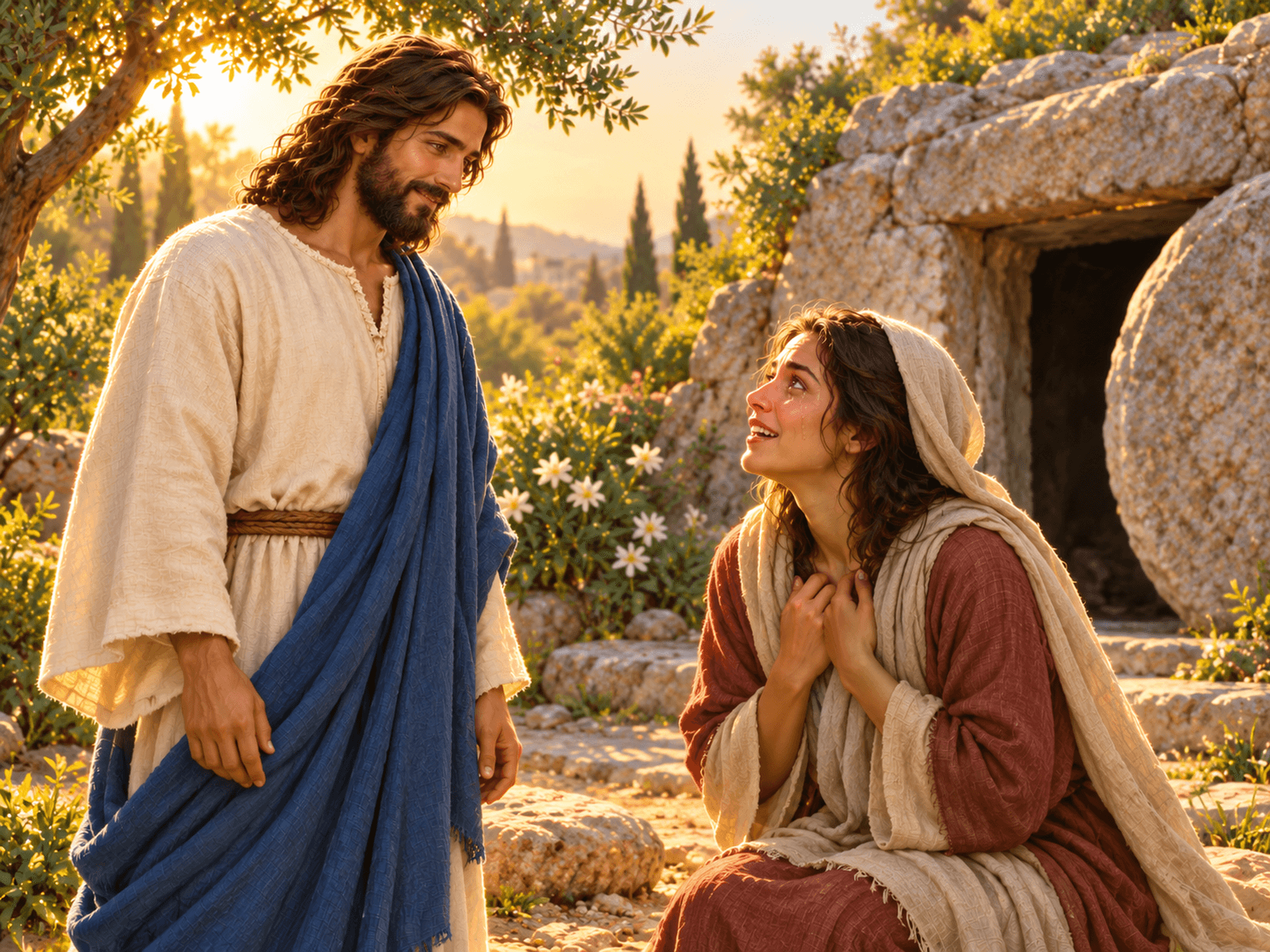
Illustrated scene from Jesus's story: Jesus Appears to Mary Magdalene (John 20:11–18)
Meet the people of the Bible
Follow their lives in order, with illustrated scenes and Bible passages that tell their stories.
 Jesus

Photo: Gary Todd (Gary Lee Todd, Ph.D.), via Wikimedia Commons. License: CC0 1.0 Universal Public Domain Dedication. Source. Location: Southern end of the Temple Mount, Jerusalem Old City. Resized for the web.
Explore the places of the Bible
See where biblical events happened, why each place matters, and what archaeology helps us understand.
Jerusalem
David's capital, the city of the temple, and the place where Jesus died and rose again.
Get full access with one subscription
Explore the people and places of the Bible. Read summaries of every book, with images and clear explanations covering every chapter. Access all these features and our Bible study tools with one subscription.
See PlansAsk AI about John 20:12
Ask a question about this verse and get a clear answer, with Bible references you can read for yourself.
Every Bible book, explained chapter by chapter
Explore summaries of every book of the Bible, with images and easy-to-understand explanations covering every chapter.
Keep studying John 20:12
Related Bible verses
Key themes
Related topics
At a Glance — the Book of John
- Author
- John the apostle
- Written
- Around AD 85-95
- Genre
- Gospel
- Original Audience
- All believers
Frequently Asked Questions
Quick, clear answers about this verse
What does John 20:12 mean?
John 20:12 describes Mary Magdalene's encounter with two angels at Jesus' tomb. Their presence signifies the miraculous resurrection of Jesus and serves as a divine message of hope.
What is the significance of the angels in John 20:12?
The angels in John 20:12 symbolize divine approval and the transition from death to life. They indicate that Jesus' resurrection is a pivotal moment in God's plan for humanity.
Why are there two angels in John 20:12?
The two angels in John 20:12, one at the head and one at the feet, emphasize the significance of Jesus' resurrection and serve as witnesses to this miraculous event.
How does John 20:12 relate to hope?
John 20:12 relates to hope by showing Mary Magdalene's encounter with angels, which marks the shift from mourning to the joy of resurrection, reminding believers of new beginnings.
Daily Verse — straight to your inbox
A verse and a 2-sentence plain-English explanation, every morning. Free. Unsubscribe anytime.