New Testament
John 20:13
Read the Bible in clear, modern English—easy to understand, faithful to the meaning, and written for everyday readers.
They asked her, "Woman, why are you crying?" She said to them, "They have taken away my Lord, and I don't know where they've put him."
Compare translations
And they say unto her, Woman, why weepest thou? She saith unto them, Because they have taken away my LORD, and I know not where they have laid him.
What John 20:13 means
Plain-English insight for readers
In this verse, Mary Magdalene encounters two angels at the tomb of Jesus after His resurrection. They ask her why she is crying, showing concern for her distress. Mary responds by expressing her sorrow over the disappearance of Jesus' body, indicating her deep grief and confusion. She feels lost and abandoned, not understanding what has happened to her Lord. This moment highlights the emotional turmoil she is experiencing, as she is not only mourning the death of Jesus but also grappling with the uncertainty of His whereabouts. Her response reflects a profound sense of loss and longing for the one who had transformed her life. This interaction sets the stage for the revelation of Jesus' resurrection, emphasizing the transition from despair to hope that follows in the narrative. Mary’s experience resonates with anyone who has faced loss, illustrating the human struggle with grief and the search for understanding in times of sorrow.
How to apply John 20:13 to your life
When faced with loss or confusion, like Mary, we can express our feelings honestly. It's important to seek understanding and support during difficult times. Remember that hope can emerge from despair, and answers may come when we least expect them.
Curated for this public verse page. John Summary
Learn the Bible through its people and places
Get to know the people in Scripture through illustrated stories, and explore the places where they lived and traveled.
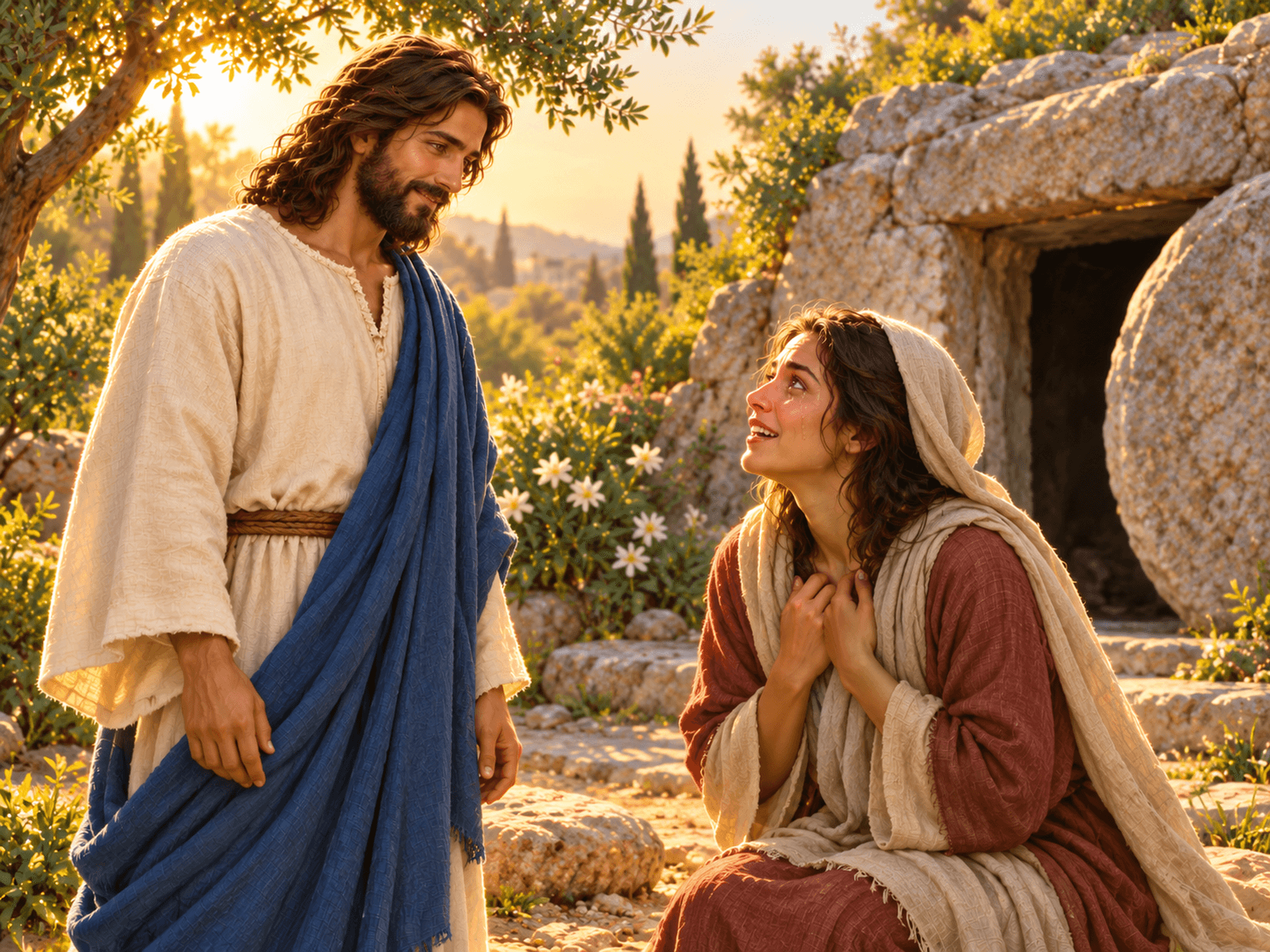
Illustrated scene from Jesus's story: Jesus Appears to Mary Magdalene (John 20:11–18)
Meet the people of the Bible
Follow their lives in order, with illustrated scenes and Bible passages that tell their stories.
 Jesus

Photo: Gary Todd (Gary Lee Todd, Ph.D.), via Wikimedia Commons. License: CC0 1.0 Universal Public Domain Dedication. Source. Location: Southern end of the Temple Mount, Jerusalem Old City. Resized for the web.
Explore the places of the Bible
See where biblical events happened, why each place matters, and what archaeology helps us understand.
Jerusalem
David's capital, the city of the temple, and the place where Jesus died and rose again.
Get full access with one subscription
Explore the people and places of the Bible. Read summaries of every book, with images and clear explanations covering every chapter. Access all these features and our Bible study tools with one subscription.
See PlansAsk AI about John 20:13
Ask a question about this verse and get a clear answer, with Bible references you can read for yourself.
Every Bible book, explained chapter by chapter
Explore summaries of every book of the Bible, with images and easy-to-understand explanations covering every chapter.
Keep studying John 20:13
Related Bible verses
Related topics
At a Glance — the Book of John
- Author
- John the apostle
- Written
- Around AD 85-95
- Genre
- Gospel
- Original Audience
- All believers
Frequently Asked Questions
Quick, clear answers about this verse
What does John 20:13 mean?
John 20:13 describes Mary Magdalene's encounter with two angels at Jesus' tomb after His resurrection. They ask her why she is crying, and she expresses her sorrow over the missing body of Jesus, reflecting her deep grief and confusion.
What is the significance of Mary Magdalene's response in John 20:13?
Mary's response in John 20:13 highlights her emotional turmoil and sense of loss after Jesus' death. It shows her deep connection to Him and sets the stage for the revelation of His resurrection, emphasizing the transition from despair to hope.
What does the phrase 'They have taken away my Lord' mean in John 20:13?
In John 20:13, when Mary says 'They have taken away my Lord,' she expresses her anguish over the disappearance of Jesus' body. This phrase captures her feelings of abandonment and confusion in a moment of profound grief.
What themes are present in John 20:13?
John 20:13 encompasses themes of grief, loss, the search for truth, divine encounter, hope, and resurrection. These themes resonate with anyone who has experienced sorrow and the longing for understanding.
Daily Verse — straight to your inbox
A verse and a 2-sentence plain-English explanation, every morning. Free. Unsubscribe anytime.