New Testament
Mark 16:1
Read the Bible in clear, modern English—easy to understand, faithful to the meaning, and written for everyday readers.
After the Sabbath was over, Mary Magdalene, Mary the mother of James, and Salome bought spices so they could go and anoint Jesus' body.
Compare translations
And when the sabbath was past, Mary Magdalene, and Mary the mother of James, and Salome, had bought sweet spices, that they might come and anoint him.
What Mark 16:1 means
Plain-English insight for readers
After the Sabbath, which is a day of rest in Jewish tradition, three women—Mary Magdalene, Mary the mother of James, and Salome—went to buy spices. Their intention was to anoint the body of Jesus, who had been crucified and buried. This act of anointing was a common practice to honor the dead and show respect. The timing is significant because it shows their devotion and love for Jesus, as they were willing to act immediately after the Sabbath restrictions were lifted. The mention of specific individuals highlights their importance in the narrative and their role as witnesses to the events surrounding Jesus' death and resurrection. This moment sets the stage for the discovery of the empty tomb and the resurrection, which is central to Christian belief. The act of preparing spices also reflects the deep sorrow and mourning they felt for Jesus, indicating the profound impact He had on their lives.
How to apply Mark 16:1 to your life
This passage encourages us to act on our love and devotion for others, especially in times of loss. Just as the women took initiative to honor Jesus, we can find ways to show care and support to those grieving or in need. It reminds us that our actions can reflect our faith and commitment.
Curated for this public verse page. Mark Summary
Learn the Bible through its people and places
Get to know the people in Scripture through illustrated stories, and explore the places where they lived and traveled.
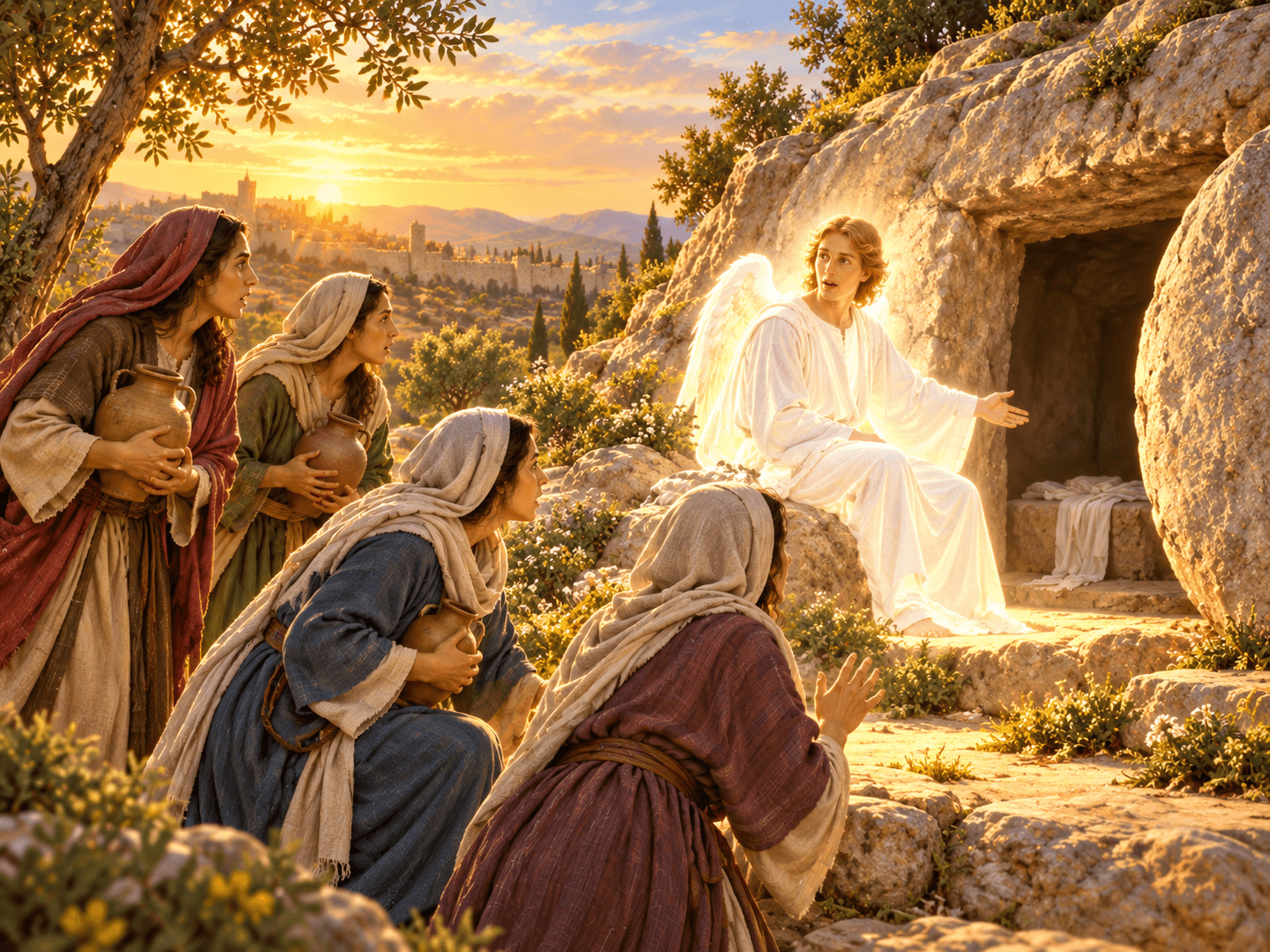
Illustrated scene from Jesus's story: The Empty Tomb (Mark 16:1–8)
Meet the people of the Bible
Follow their lives in order, with illustrated scenes and Bible passages that tell their stories.
 Jesus

Photo: Photochrom print, Library of Congress Prints and Photographs Division (LCCN 2002724966). License: Public domain in the United States; Library of Congress states no known restrictions on publication. Source. Location: Bethlehem, West Bank; print preserved by the Library of Congress. Resized for the web.
Explore the places of the Bible
See where biblical events happened, why each place matters, and what archaeology helps us understand.
Bethlehem
David's hometown, and the town where Jesus was born.
Get full access with one subscription
Explore the people and places of the Bible. Read summaries of every book, with images and clear explanations covering every chapter. Access all these features and our Bible study tools with one subscription.
See PlansAsk AI about Mark 16:1
Ask a question about this verse and get a clear answer, with Bible references you can read for yourself.
Every Bible book, explained chapter by chapter
Explore summaries of every book of the Bible, with images and easy-to-understand explanations covering every chapter.
Keep studying Mark 16:1
Related Bible verses
Related topics
At a Glance — the Book of Mark
- Author
- John Mark
- Written
- Around AD 55-65
- Genre
- Gospel
- Original Audience
- Roman and Gentile Christians
Frequently Asked Questions
Quick, clear answers about this verse
What does Mark 16:1 mean?
Mark 16:1 describes the actions of three women who, after the Sabbath, went to buy spices to anoint Jesus' body. This reflects their devotion and love for Him, as well as the cultural practice of honoring the dead.
Who are the women mentioned in Mark 16:1?
The women mentioned are Mary Magdalene, Mary the mother of James, and Salome. They play a significant role as witnesses to Jesus' death and the events that follow.
Why did the women buy spices in Mark 16:1?
The women bought spices to anoint Jesus' body, which was a common practice in Jewish tradition to show respect and honor for the deceased.
What is the significance of the timing in Mark 16:1?
The timing is significant because it shows the women's immediate action after the Sabbath, highlighting their devotion to Jesus and their willingness to honor Him even after His death.
Daily Verse — straight to your inbox
A verse and a 2-sentence plain-English explanation, every morning. Free. Unsubscribe anytime.