New Testament
Matthew 21:34
Read the Bible in clear, modern English—easy to understand, faithful to the meaning, and written for everyday readers.
When harvest time came, he sent his servants to the farmers to collect his share of the fruit.
Compare translations
And when the time of the fruit drew near, he sent his servants to the husbandmen, that they might receive the fruits of it.
What Matthew 21:34 means
Plain-English insight for readers
In this verse, a landowner sends his servants to collect the fruits from the farmers who are working his land. This scenario illustrates the expectation of the landowner to receive what is rightfully his after the harvest. The servants represent the prophets sent by God to His people, and the farmers symbolize those who reject God's messengers. The verse highlights the theme of accountability, as the farmers are expected to give back a portion of the harvest to the landowner. It sets the stage for the unfolding parable about the rejection of God's messengers and the consequences that follow. The act of sending servants signifies God's ongoing relationship with humanity, where He seeks to gather what belongs to Him. This moment foreshadows the eventual rejection of Jesus, the ultimate messenger, by the people He came to save. Understanding this context helps readers grasp the deeper spiritual implications of stewardship and the responsibilities that come with it.
How to apply Matthew 21:34 to your life
This verse encourages us to reflect on our responsibilities in life. Just as the farmers were expected to give back to the landowner, we too are called to recognize what we owe to God. This includes our time, talents, and resources. We should strive to honor our commitments and be good stewards of what we have been given.
Curated for this public verse page. Matthew Summary
Explore more of the Bible
Learn the Bible through its people and places
Get to know the people in Scripture through illustrated stories, and explore the places where they lived and traveled.
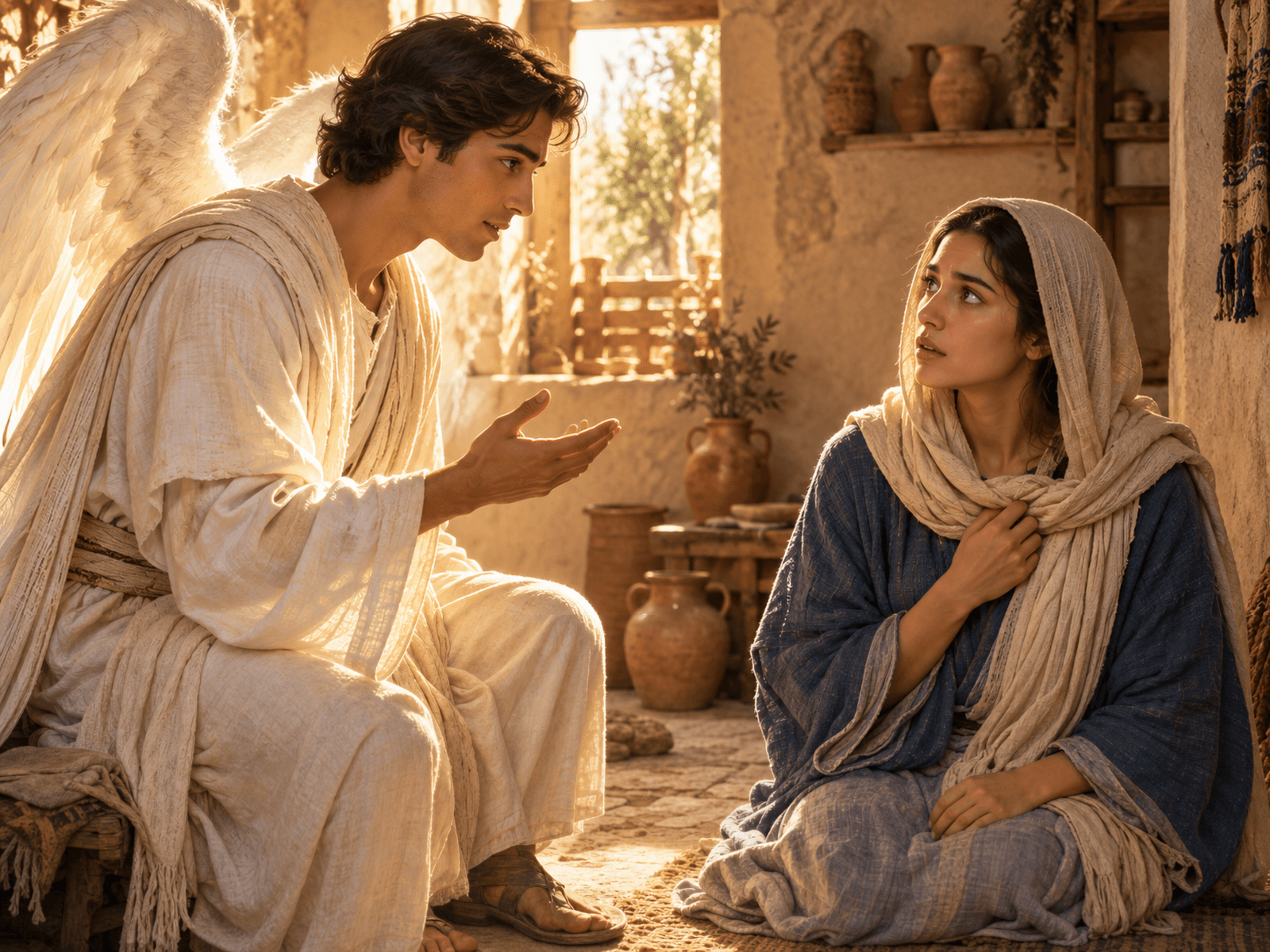
Illustrated scene from Jesus's story: An Angel Visits Mary (Luke 1:26–38)
Meet the people of the Bible
Follow their lives in order, with illustrated scenes and Bible passages that tell their stories.
 Jesus

Photo: Gary Todd (Gary Lee Todd, Ph.D.), via Wikimedia Commons. License: CC0 1.0 Universal Public Domain Dedication. Source. Location: Southern end of the Temple Mount, Jerusalem Old City. Resized for the web.
Explore the places of the Bible
See where biblical events happened, why each place matters, and what archaeology helps us understand.
Jerusalem
David's capital, the city of the temple, and the place where Jesus died and rose again.
Get full access with one subscription
Explore the people and places of the Bible. Read summaries of every book, with images and clear explanations covering every chapter. Access all these features and our Bible study tools with one subscription.
See PlansAsk AI about Matthew 21:34
Ask a question about this verse and get a clear answer, with Bible references you can read for yourself.
Every Bible book, explained chapter by chapter
Explore summaries of every book of the Bible, with images and easy-to-understand explanations covering every chapter.
Keep studying Matthew 21:34
Related Bible verses
Key themes
Related topics
At a Glance — the Book of Matthew
- Author
- Matthew the apostle
- Written
- Around AD 60-70
- Genre
- Gospel
- Original Audience
- Jewish Christians
Frequently Asked Questions
Quick, clear answers about this verse
What does Matthew 21:34 mean?
Matthew 21:34 describes a landowner sending his servants to collect the fruits from farmers working his land, symbolizing God's expectation for His people to return what is rightfully His.
What is the meaning of 'harvest time' in Matthew 21:34?
'Harvest time' in Matthew 21:34 signifies a period of accountability when the landowner expects to receive the fruits of the labor, illustrating the expectation of giving back to God.
How does Matthew 21:34 relate to stewardship?
Matthew 21:34 highlights stewardship by showing that just as the farmers are expected to give back to the landowner, we are called to recognize and fulfill our responsibilities to God with our resources.
What themes are present in Matthew 21:34?
Key themes in Matthew 21:34 include accountability, the rejection of God's messengers, stewardship, and the consequences of failing to meet God's expectations.
Daily Verse — straight to your inbox
A verse and a 2-sentence plain-English explanation, every morning. Free. Unsubscribe anytime.