What Does Acts 1:8 Mean?
Acts 1:8 meaning: How does the Holy Spirit empower believers for worldwide witness and what does this look like practically?
King James Version
But ye shall receive power, after that the Holy Ghost is come upon you: and ye shall be witnesses unto me both in Jerusalem, and in all Judaea, and in Samaria, and unto the uttermost part of the earth.
Clear Bible Translation
Modern EnglishBut you will receive power when the Holy Spirit comes upon you. And you will be my witnesses — in Jerusalem, throughout all Judaea and Samaria, and to the farthest corners of the earth."
Verse Analysis
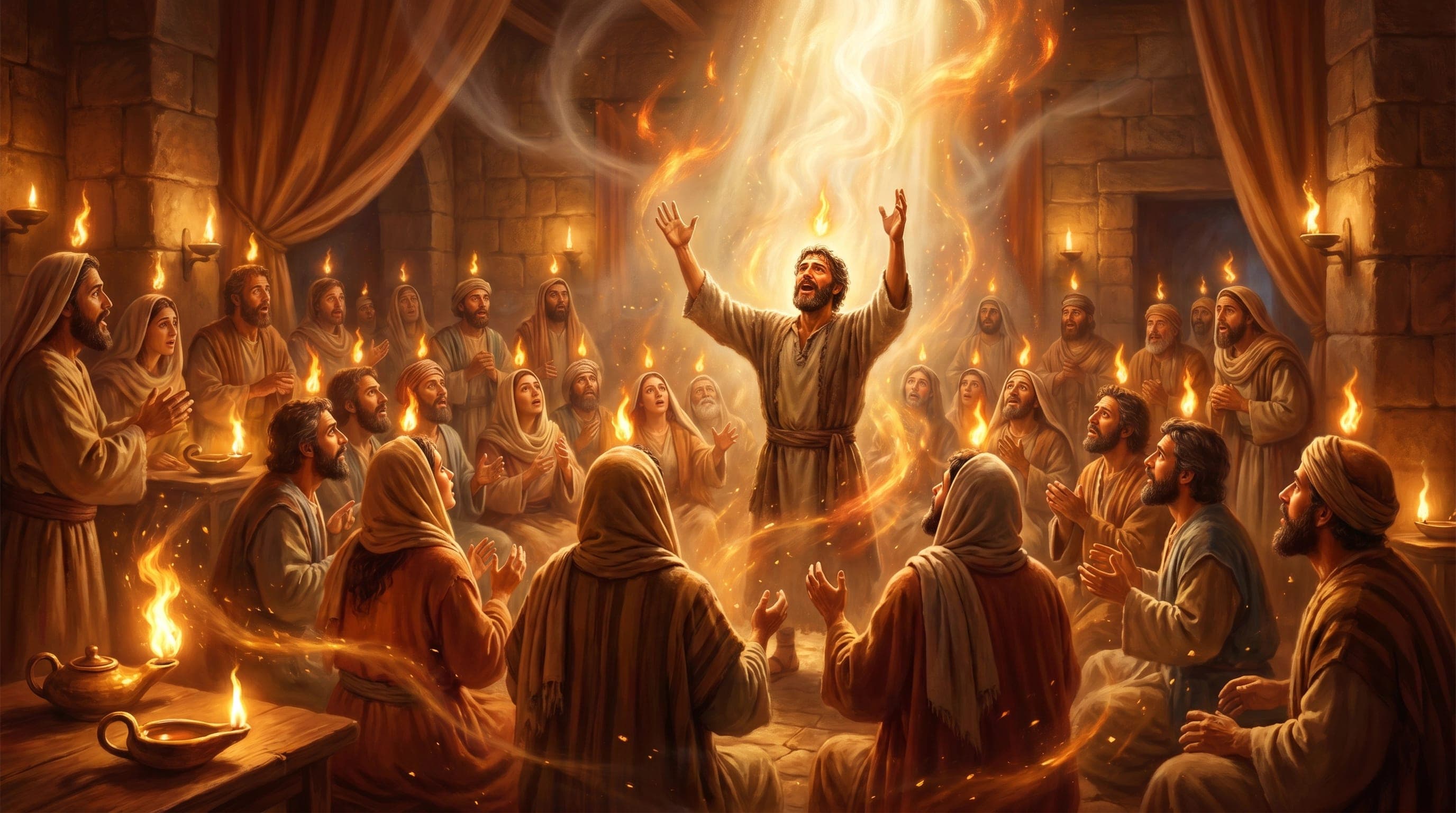
Picture the disciples standing with Jesus on the Mount of Olives, still buzzing with questions about when he would restore Israel's kingdom. Instead of political revolution, Jesus promises something far more radical: divine power that would transform fishermen into world-changers. The Holy Spirit wouldn't just visit them—he would come upon them with the same authority that raised Christ from the dead. Notice the geographical progression Jesus outlines: Jerusalem (their comfort zone), Judaea (familiar territory), Samaria (hostile neighbors), and the uttermost parts of the earth (unimaginable frontiers). This wasn't merely a missionary strategy but a complete inversion of how God's people understood their calling. Rather than waiting for the nations to come to Jerusalem, they would carry God's presence to every corner of creation. The Greek word for 'witnesses' (martyres) carries legal weight—these weren't just storytellers but courtroom testifiers whose very lives would validate their testimony.
This verse represents Jesus' final earthly instructions to his disciples before his ascension. Luke has just recorded their question about restoring Israel's kingdom, revealing they still thought in terms of political messianism. Jesus redirects their focus from timing ('when') to mission ('you shall be witnesses'). Immediately after these words, Jesus ascends into heaven, leaving the disciples to wait in Jerusalem for the Spirit's arrival—which Luke will describe in Acts 2.
Luke wrote Acts around 62-70 AD, documenting how Jesus' promise was fulfilled through the early church's explosive growth across the Roman Empire.
Read the full chapter: Acts 1 →
Applying This to Daily Life
Every believer receives this same Spirit-empowered calling to expand their witness beyond comfortable boundaries. The geographical progression challenges us to identify our own 'Jerusalem' (where we are now), 'Judaea' (familiar but broader territory), 'Samaria' (places of tension or prejudice), and 'uttermost parts' (seemingly impossible reaches).
Thematic Connections
- Matthew 28:19 →Connects holy spirit empowerment with great commission
- John 14:6 →Connects holy spirit empowerment with exclusive salvation
- 2 Timothy 3:16 →Connects holy spirit empowerment with biblical authority
Key Questions Answered
- What is the main theme of Acts 1:8?
- The primary theme is holy spirit empowerment. Related themes include witness and global mission and divine calling.
- Why is Acts 1:8 significant?
- Every believer receives this same Spirit-empowered calling to expand their witness beyond comfortable boundaries. The geographical progression challenges us to identify our own 'Jerusalem' (where we are now), 'Judaea' (familiar but broader territory), 'Samaria' (places of tension or prejudice), and 'uttermost parts' (seemingly impossible reaches).
- Where can I find Acts 1:8?
- Acts, chapter 1, verse 8. Read Acts 1 →
Daily Verse — straight to your inbox
A verse and a 2-sentence plain-English explanation, every morning. Free. Unsubscribe anytime.